

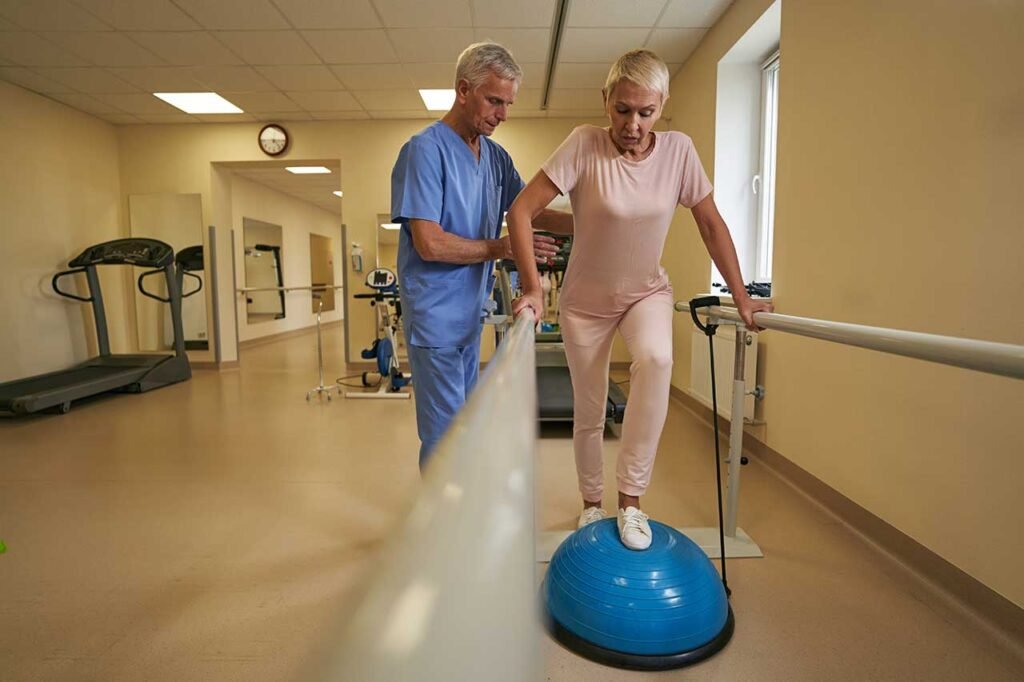
Have you ever felt unsteady while walking, turning around or climbing stairs? Maintaining good balance is an important part of everyday life. It allows you to move confidently, perform daily activities and maintain independence.
Balance naturally changes as we age, but it can also be affected by muscle weakness, reduced physical activity, certain medical conditions and previous injuries.
The good news is that appropriate physical activity and regular practice can help many people improve their balance and coordination.
In this article, we explore seven practical balance exercises, explain why stability matters and discuss how physiotherapy can support safer movement.
Why Is Balance Important?
Balance is your body’s ability to maintain stability while standing still or moving. It involves coordination between your muscles, joints, eyes, inner ear and nervous system.
You use your balance every day, often without thinking about it. Simple activities that depend on good balance include:
- Standing up from a chair.
- Walking on different surfaces.
- Turning while moving around the house.
- Climbing stairs.
- Getting dressed while standing.
- Reaching for objects.
When balance becomes difficult, everyday activities may feel less comfortable and confidence can decrease.
What Can Affect Your Balance?
Several factors can influence your ability to maintain stability.
1. Muscle Weakness
Weakness in the legs, hips and core muscles may make it more difficult to control your body while standing and walking.
2. Age-Related Changes
Changes in muscle strength, reaction time, vision and sensory function can affect balance as people get older.
3. Reduced Physical Activity
Spending long periods sitting or avoiding movement can contribute to reduced strength, endurance and coordination.
4. Previous Injuries
Injuries involving the ankles, knees, hips or back may affect movement patterns and confidence during physical activity.
5. Medical Conditions
Some neurological, vestibular and musculoskeletal conditions can affect balance. Certain medications may also contribute to dizziness or unsteadiness.
7 Simple Balance Exercises to Improve Stability
The following exercises are general examples. Choose activities appropriate for your ability and perform them near a stable support, such as a kitchen bench or sturdy chair. If you have frequent falls, significant dizziness or severe balance difficulties, seek professional assessment before attempting these exercises.
1. Standing on One Leg
This exercise challenges your ability to maintain stability while standing on one foot.
How to perform it:
- Stand upright beside a sturdy chair or bench.
- Hold the support if needed.
- Slowly lift one foot a short distance from the floor.
- Maintain your balance for a comfortable period.
- Lower your foot and repeat with the other leg.
Begin with support and gradually reduce assistance only when it is safe to do so.
2. Heel-to-Toe Standing
Heel-to-toe standing challenges your balance by narrowing the space between your feet.
How to perform it:
- Stand beside a stable support.
- Place one foot directly in front of the other.
- Try to keep your body upright.
- Hold the position for a comfortable duration.
- Switch the position of your feet.
Use support whenever necessary. Do not attempt this exercise if you feel unsafe standing in this position.
3. Heel Raises
Heel raises help strengthen the calf muscles, which contribute to ankle control and walking.
How to perform it:
- Stand behind a sturdy chair.
- Hold the chair for support.
- Slowly lift your heels off the floor.
- Rise onto your toes as comfortably as possible.
- Lower your heels slowly.
Keep your movements controlled and avoid rushing through the exercise.
4. Sideways Walking
Sideways walking encourages coordination and control of the muscles around your hips and legs.
How to perform it:
- Stand beside a kitchen bench or stable support.
- Keep your feet comfortably apart.
- Take a small step sideways.
- Bring your other foot towards the first foot.
- Continue for a short distance, then change direction.
Take small steps and maintain a comfortable posture throughout the movement.
5. Sit-to-Stand Exercise
Standing up from a chair is an everyday activity that requires leg strength and coordination.
How to perform it:
- Sit on a stable chair with your feet flat on the floor.
- Lean your upper body slightly forwards.
- Push through your feet to stand up.
- Slowly lower yourself back into the chair.
- Repeat at a comfortable pace.
Use your hands for support if necessary. Choose a suitable chair height and avoid performing the exercise if you feel unstable.
6. Marching on the Spot
Marching on the spot helps practise weight shifting and coordination between your legs.
How to perform it:
- Stand upright near a stable support.
- Slowly lift one knee.
- Lower your foot carefully.
- Repeat with the opposite leg.
- Continue alternating between legs.
Keep the movement controlled and use support if needed.
7. Controlled Weight Shifting
Weight shifting helps you practise controlling your body as your centre of gravity moves.
How to perform it:
- Stand with your feet comfortably apart.
- Keep your hands near a stable support.
- Gently shift your weight towards one leg.
- Return to the centre.
- Repeat towards the other leg.
Avoid leaning too far in either direction. Keep the movement small and controlled.
How Often Should You Practise Balance Exercises?
The appropriate frequency depends on your current balance, fitness level and health conditions. For many people, short and regular practice sessions can be easier to maintain than occasional long sessions.
Consider the following general approach:
| Activity | General Approach |
|---|---|
| Balance practice | Begin with short sessions using appropriate support. |
| Leg strengthening | Include suitable strengthening exercises in your weekly routine. |
| Walking | Walk regularly according to your ability and comfort. |
| Progression | Increase difficulty gradually with professional guidance when needed. |
Consistency and safety are more important than attempting difficult exercises too early.
Everyday Tips to Maintain Better Balance
Balance training does not need to happen only during exercise sessions. You can also support your stability through everyday habits.
- Stay active: Include suitable physical activity in your daily routine.
- Wear appropriate footwear: Choose comfortable shoes that fit securely.
- Keep walking areas clear: Remove loose rugs, clutter and other trip hazards at home.
- Improve lighting: Make sure hallways, stairs and frequently used areas are well lit.
- Use handrails: Hold available handrails when using stairs.
- Review dizziness: Discuss frequent dizziness or unsteadiness with a healthcare professional.
- Build leg strength: Include suitable strengthening exercises in your routine.
When Should You Seek Professional Help?
Occasional unsteadiness may happen for different reasons, but repeated balance difficulties should be assessed rather than ignored.
Consider consulting a healthcare professional if you experience:
- Frequent loss of balance.
- Difficulty walking without support.
- Repeated falls or near-falls.
- New dizziness or a spinning sensation.
- Difficulty climbing stairs.
- Reduced confidence when moving around independently.
Sudden balance problems accompanied by facial drooping, weakness or numbness on one side, difficulty speaking, new vision changes or a sudden severe headache may indicate a medical emergency. Call emergency services immediately.
How Can Physiotherapy Help Improve Balance?
Physiotherapy can help people who experience reduced stability, coordination difficulties or movement limitations.
A physiotherapist may assess several areas, including:
- Lower-limb muscle strength.
- Walking pattern and mobility.
- Static and dynamic balance.
- Joint movement and flexibility.
- Coordination and functional movement.
- Confidence during everyday activities.
Based on the assessment, your physiotherapist may develop an individualised programme involving strengthening, balance practice, walking activities and functional exercises.
Explore PAX Physiotherapy services to learn more about available physiotherapy support.
Frequently Asked Questions About Balance Exercises
1. Can balance improve with exercise?
Many people can improve aspects of balance and coordination through appropriate, regular practice. The results depend on the underlying cause of the balance difficulty and individual health.
2. Are balance exercises suitable for older adults?
Yes. Appropriate balance and strengthening exercises can support mobility and independence in older adults. Exercises should be selected according to individual ability and safety needs.
3. How long does it take to improve balance?
Progress varies from person to person. Factors such as age, physical condition, consistency and underlying health conditions can influence how quickly balance improves.
4. Can walking improve balance?
Walking supports general physical activity and coordination. However, people with significant balance difficulties may need additional exercises specifically designed to improve stability.
5. Why do I feel unsteady when standing on one leg?
Single-leg standing requires coordination, muscle strength and sensory control. Feeling unsteady can have several causes, including reduced strength or balance ability. Persistent difficulties should be assessed.
6. Should I practise balance exercises every day?
Some people may benefit from regular short sessions, but the appropriate frequency depends on their abilities and health. A physiotherapist can recommend a suitable routine.
7. Can physiotherapy help after a fall?
Yes. After appropriate medical assessment, physiotherapy may help address strength, mobility, coordination and balance concerns. The programme depends on the person’s injuries and recovery needs.
Take Steps Towards Better Balance with PAX Physiotherapy
Good balance supports many everyday activities, from walking around your home to climbing stairs and enjoying time outdoors. Maintaining strength, staying active and practising suitable exercises can help support your movement and confidence.
If you are experiencing unsteadiness, reduced mobility or difficulty performing everyday activities, a physiotherapy assessment may help identify suitable ways to improve your movement.
Contact PAX Physiotherapy in Modbury North, Adelaide, to discuss your mobility and rehabilitation goals.
PAX Physiotherapy
Unit 2, 438 Montague Road, Modbury North SA 5092
Phone: 08 8333 8333
Mobile: 0499 999 636
Email: admin@paxphysiotherapy.com.au
Website: PAX Physiotherapy
Medical Disclaimer
This article is intended for general educational purposes and does not replace professional medical advice, diagnosis or treatment. Balance exercises may not be suitable for everyone. If you have a history of falls, dizziness, neurological conditions or significant mobility limitations, seek professional guidance before beginning a new exercise programme.
