

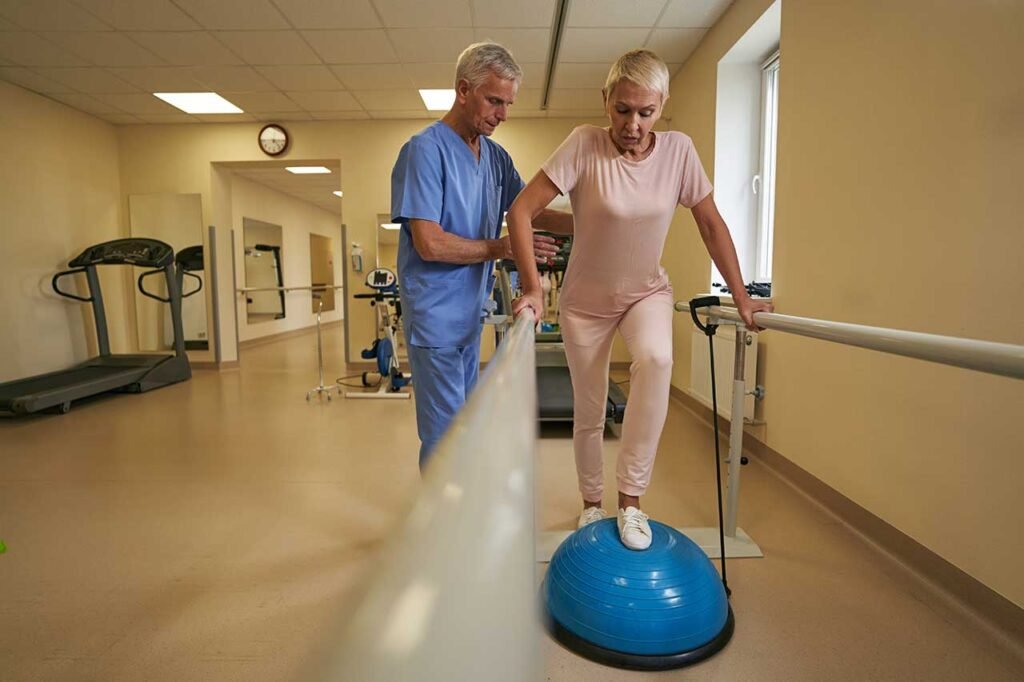
Recovering from knee replacement surgery takes time, patience and the right rehabilitation approach. Although surgery aims to reduce pain and improve joint function, everyday activities such as walking, climbing stairs and getting up from a chair may remain challenging during the early stages of recovery.
Knee replacement rehabilitation plays an important role in helping patients gradually rebuild strength, improve knee movement and regain confidence with daily activities. Following your surgical team’s instructions and completing an appropriate exercise programme can support your recovery while helping you understand how to progress safely.
Every person’s recovery is different. Factors such as general health, muscle strength, the type of surgery and individual healing can influence progress. In this article, we explore seven helpful recovery tips, explain how physiotherapy may support rehabilitation and discuss when you should seek medical advice.
What Is Knee Replacement Rehabilitation?
Knee replacement rehabilitation is the process of gradually restoring movement, strength, balance and functional ability after knee replacement surgery.
During the procedure, damaged joint surfaces are replaced with artificial components. Surgery may help reduce pain and improve mobility for people whose knee problems have not responded sufficiently to other treatments.
However, the surrounding muscles and tissues need time to recover. Swelling, stiffness, discomfort and muscle weakness can occur after surgery and may affect walking and everyday movement.
Rehabilitation typically involves a combination of prescribed exercises, walking practice, activity modification and guidance from healthcare professionals.
Your rehabilitation programme should follow the instructions provided by your surgeon and physiotherapist. The exercises and activities appropriate during the first few days after surgery may differ considerably from those recommended several weeks later.
The goal is to make gradual, safe progress towards your personal recovery goals.
Common Challenges After Knee Replacement Surgery
Although knee replacement surgery can improve symptoms for many people, recovery may involve several temporary challenges.
1. Knee Swelling
Swelling is common following surgery and may fluctuate as your activity levels change. Increased swelling can make the knee feel tight and may temporarily limit movement.
2. Reduced Knee Movement
Bending and straightening the knee may be difficult during the early recovery period. Restoring movement gradually is an important part of rehabilitation.
3. Muscle Weakness
The muscles around the knee and thigh may become weaker because of the original joint condition, reduced activity before surgery and the recovery process itself.
4. Difficulty Walking
You may initially need a walking aid to help you move safely. Walking distance and confidence generally need to be rebuilt gradually.
5. Reduced Balance and Confidence
Pain, weakness and changes in walking can make some patients feel less confident when standing, turning or using stairs.
These challenges do not necessarily mean that recovery is going badly. However, symptoms should be monitored, and any concerns should be discussed with your healthcare team.
7 Helpful Tips for Knee Replacement Rehabilitation
A structured rehabilitation plan can help you work towards better movement and everyday function. The following tips provide general guidance, but your surgeon’s and physiotherapist’s instructions should take priority.
1. Follow Your Individualised Exercise Programme
Your prescribed exercises are an important part of recovering after knee replacement surgery.
Exercises may be designed to maintain knee movement, activate the thigh muscles and gradually improve strength. The appropriate programme depends on your stage of recovery, surgical instructions and current abilities.
Your programme may include movements such as:
Gentle ankle movements to encourage circulation.
Prescribed knee-bending exercises.
Exercises that activate the thigh muscles.
Supported standing activities.
Gradual functional strengthening when appropriate.
Do not attempt every exercise immediately after surgery. Your healthcare team will advise which movements are suitable and how frequently to perform them.
Avoid forcing the knee through severe pain or performing additional exercises simply to speed up recovery. If an exercise causes unexpected or substantial discomfort, stop and ask your physiotherapist for advice.
2. Work on Knee Movement Gradually
Regaining the ability to bend and straighten the knee is an important rehabilitation goal.
Stiffness can make activities such as sitting comfortably, walking and climbing stairs more difficult. Your physiotherapist may prescribe specific movements to improve your knee’s range of motion.
For better consistency:
Complete your prescribed exercises as instructed.
Use controlled movements rather than sudden or forceful stretching.
Follow guidance on how far to bend the knee.
Allow adequate recovery between exercise sessions.
Discuss persistent or worsening stiffness with your healthcare team.
Progress may not happen at the same rate every day. Some variation is normal, but you should seek advice if movement is becoming increasingly restricted or pain is worsening.
Avoid forcing your knee into a position that causes severe pain.
3. Build Walking Confidence Safely
Walking is an important part of returning to everyday activities after knee replacement surgery.
However, walking too far too soon can increase discomfort and swelling. The right distance depends on your recovery stage, strength and balance.
Your physiotherapist may recommend short, regular walks and gradually increase the distance as your ability improves.
Consider these general principles:
Use your prescribed walking aid until your healthcare team advises otherwise.
Choose a clear, safe walking route.
Take your time when turning or changing direction.
Avoid rushing on stairs or uneven surfaces.
Increase walking distance gradually rather than making sudden jumps.
Do not stop using a walking aid simply because you want to become independent sooner. Using the appropriate support can help reduce the risk of falling while your strength and balance recover.
If you suddenly become unable to put weight on the operated leg, seek prompt medical assessment.
4. Manage Swelling and Discomfort Appropriately
Some swelling and discomfort are expected during recovery, but managing symptoms can make rehabilitation more comfortable.
Your surgical team may recommend elevating your leg, applying a cold pack safely or adjusting your activity levels.
If you use a cold pack, wrap it in a suitable towel and follow your healthcare team’s instructions. Avoid placing ice directly on your skin, and take extra care if you have reduced sensation.
Medication should be taken according to your prescription and medical advice.
It can also help to monitor how your knee responds to activity. If swelling or discomfort increases significantly after exercise, discuss whether your programme or activity levels need adjustment.
Important: New or increasing swelling, redness, warmth or pain should not automatically be attributed to normal recovery. Contact your healthcare team if symptoms are concerning, particularly if they are worsening.
5. Strengthen Your Leg Muscles Progressively
The muscles around your knee and hip help support walking, standing and other everyday activities.
After surgery, rebuilding muscle strength can help you work towards greater independence. However, strengthening exercises must be introduced at the appropriate stage.
Your physiotherapist may gradually progress your programme from basic muscle activation to functional activities such as supported standing and sit-to-stand practice.
As your recovery advances, the programme may be adjusted to reflect improvements in strength and movement.
To support progress:
Follow the exercise plan provided for your recovery stage.
Prioritise correct technique over the number of repetitions.
Increase resistance or difficulty only when advised.
Avoid comparing your progress with another patient’s recovery.
Report persistent pain or unusual symptoms during exercise.
Consistent, appropriately progressed exercise is generally more useful than attempting strenuous movements before your knee is ready.
6. Make Your Home Environment Safer
Your home environment can affect how comfortably and safely you move during recovery.
Before returning home, consider whether your daily routine can be adapted to reduce unnecessary strain and the risk of falls.
Helpful measures may include:
Keeping frequently used items within easy reach.
Removing loose rugs and other tripping hazards.
Ensuring that walking routes are well lit.
Using suitable handrails on stairs.
Arranging a stable chair that is easy to get in and out of.
Keeping essential items close to your resting area.
Follow the advice provided about bathing, dressing, stairs and other activities after surgery.
If you live alone or have difficulty with everyday tasks, discuss your needs with your healthcare team before discharge so that appropriate support can be arranged.
7. Attend Follow-Up Appointments and Physiotherapy Sessions
Regular follow-up helps your healthcare team monitor healing, identify problems and adjust your rehabilitation plan.
Your surgeon may review the surgical wound, knee movement and overall recovery. Your physiotherapist can help you practise appropriate exercises, improve walking technique and progress towards functional goals.
During appointments, explain any difficulties you are experiencing. For example, you may have trouble bending the knee, walking a particular distance or managing stairs.
Clear communication helps your healthcare team understand what is working and what may need to change.
Knee replacement rehabilitation is not a competition. Progress should be based on your clinical needs and functional improvements rather than an arbitrary deadline.
How Can Physiotherapy Help After Knee Replacement Surgery?
Physiotherapy may be an important component of recovery following knee replacement surgery. The specific approach depends on your surgical instructions, current mobility and rehabilitation goals.
Assessment of Movement and Function
A physiotherapist may assess knee movement, muscle activation, walking ability and the activities you find difficult.
Your recovery stage and surgical precautions help determine which assessments and exercises are appropriate.
The information gathered can guide an individualised rehabilitation plan.
Guided Exercise Progression
Your exercise programme may progress from basic movements to more demanding strengthening and functional exercises as you recover.
The pace of progression depends on your symptoms, physical ability and clinical recommendations.
Your physiotherapist can help you understand how to perform exercises correctly and when it may be appropriate to increase their difficulty.
Walking and Balance Training
Walking practice may help improve confidence, coordination and movement efficiency.
Your physiotherapist may also assess whether you need continued use of a walking aid and provide guidance on using it safely.
Balance and functional exercises can be introduced when appropriate to help you return to daily activities.
Advice on Everyday Activities
Tasks such as standing up, getting into a car, climbing stairs and returning to work may require temporary adjustments.
A physiotherapist can provide guidance on suitable movement strategies and help you work towards these activities gradually.
You can learn more about PAX Physiotherapy’s services and its exercise rehabilitation services.
Your surgeon’s instructions remain essential throughout recovery. Physiotherapy should complement your post-operative care rather than replace medical follow-up.
What Should You Avoid During Recovery?
The activities you need to avoid depend on the type of surgery, your recovery stage and your surgeon’s recommendations.
In general, consider the following precautions:
Avoid increasing activity too quickly: Sudden increases in walking distance or exercise intensity may aggravate symptoms.
Do not ignore significant pain: Stop an activity that causes unexpected or severe pain and seek advice.
Avoid unsupported walking when unsteady: Use the walking aid recommended by your healthcare team.
Follow wound-care instructions: Keep to the advice provided about dressing care, bathing and signs of infection.
Do not skip prescribed follow-up: Appointments help your team assess recovery and identify potential complications.
Avoid unapproved exercises: Some movements may not be suitable at particular stages after surgery.
These are general precautions, not a substitute for your individual discharge instructions.
If you are uncertain whether an activity is appropriate, ask your surgeon or physiotherapist before attempting it.
When Should You Seek Medical Advice?
It is important to recognise symptoms that may indicate a complication after knee replacement surgery.
Contact your surgical team promptly if you notice:
Increasing redness, warmth or swelling around the knee.
New or worsening wound discharge.
Fever or feeling significantly unwell.
Pain that is worsening rather than gradually improving.
Sudden deterioration in your ability to move or bear weight.
Seek urgent medical assessment if you develop new calf pain or swelling, as this may indicate a blood clot.
Call emergency services immediately if you experience sudden shortness of breath, chest pain, coughing up blood or collapse, as these may be signs of a serious complication.
Do not try to manage potentially serious symptoms by simply increasing or reducing your exercises.
How Long Does Knee Replacement Rehabilitation Take?
Recovery varies between individuals. Some people make noticeable progress during the first several weeks, while others need several months or longer to regain strength, confidence and functional ability.
Your recovery timeline may depend on:
Your health and fitness before surgery.
The severity of your original knee condition.
Your muscle strength and mobility.
The type of surgery performed.
Whether complications develop.
Your ability to follow the recommended rehabilitation plan.
Some everyday activities may become easier relatively early, while improvements in strength, endurance and confidence can take longer.
It is important not to judge recovery solely by the amount of pain you experience. Your healthcare team can help monitor movement, walking ability and other functional goals.
If progress appears to stall or symptoms worsen, discuss your concerns with your surgeon or physiotherapist.
Frequently Asked Questions About Knee Replacement Rehabilitation
1. When should rehabilitation begin after knee replacement surgery?
Movement and rehabilitation often begin early after surgery when the surgical team considers it appropriate. The exact timing and exercises depend on your condition, the procedure and your post-operative instructions. Follow the plan provided by your healthcare team.
2. Is walking important after knee replacement surgery?
Walking is commonly an important part of rehabilitation, but the distance and frequency should reflect your recovery stage. Use your prescribed walking aid and follow your physiotherapist’s guidance on progressing safely.
3. Why is my knee still stiff after surgery?
Swelling, discomfort and changes in surrounding tissues can contribute to stiffness during recovery. Your prescribed exercises may help improve movement gradually. If stiffness is worsening or movement remains significantly restricted, contact your healthcare team.
4. Can physiotherapy help improve knee movement after surgery?
Physiotherapy can help guide appropriate movement exercises, strengthening and functional training. Your programme should be tailored to your surgical instructions and progress. Do not force painful movements in an attempt to regain movement more quickly.
5. How long will I need a walking aid?
The time varies according to strength, balance, pain and walking ability. Some people progress from one walking aid to another before walking independently. Your healthcare team can advise when it is safe to reduce or stop using an aid.
6. Is pain normal during knee replacement rehabilitation?
Some discomfort may occur after surgery and during rehabilitation. However, severe, unexpected or worsening pain should not be ignored. Contact your healthcare team if you are concerned about your symptoms or if pain interferes significantly with your prescribed programme.
7. When can I return to normal activities?
The timing depends on the activity, your recovery and your surgeon’s advice. Everyday tasks, driving, work and sports each have different requirements. Ask your healthcare team for guidance before returning to activities that require significant strength, balance or rapid movement.
Take the Next Step Towards Better Knee Function
Knee replacement surgery can help many people reduce joint pain and improve mobility, but rehabilitation remains an important part of the recovery process.
Following your post-operative instructions, completing appropriate exercises, gradually rebuilding strength and attending follow-up appointments can help you work towards greater independence.
If you are recovering from knee replacement surgery, speak with your healthcare team about the rehabilitation approach best suited to your needs.
PAX Physiotherapy provides physiotherapy services in Modbury North, South Australia. You can explore the clinic’s available services or contact PAX Physiotherapy to enquire about your concerns and whether an appointment may be appropriate for your stage of recovery.
PAX Physiotherapy
Address: Unit 2, 438 Montague Road, Modbury North SA 5092
Phone: 08 8333 8333
Mobile: 0499 999 636
Website: https://paxphysiotherapy.com.au/
Disclaimer
This article is for general educational purposes only and is not a substitute for personalised medical advice, diagnosis or treatment. Recovery and exercise recommendations vary according to the procedure, medical history and individual circumstances. Always follow your surgeon’s instructions and consult your healthcare team before changing your post-operative rehabilitation programme.
