

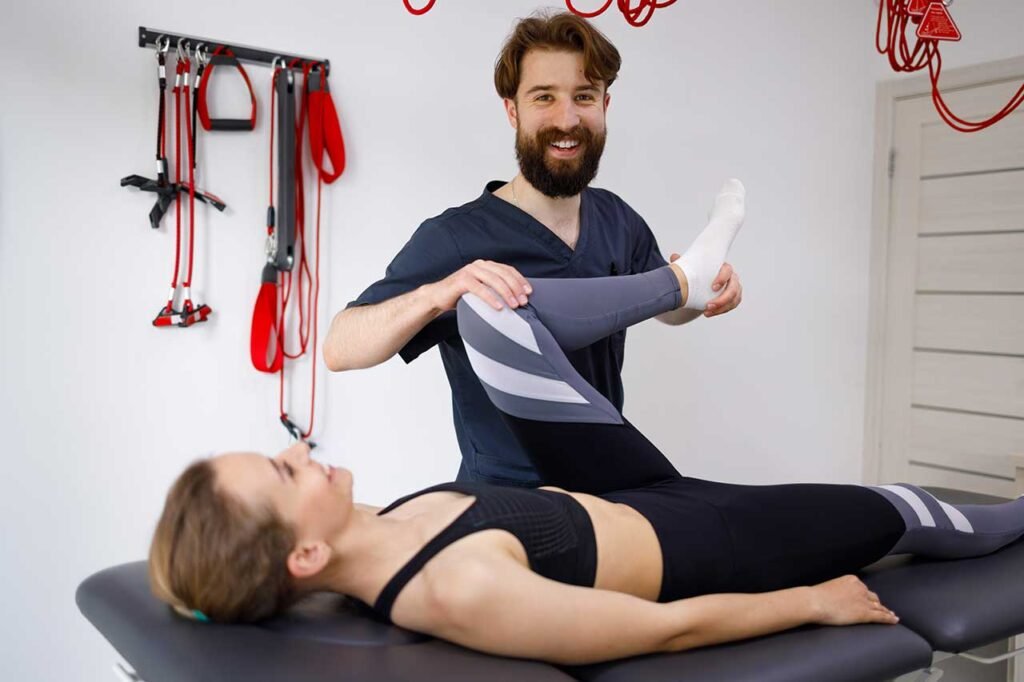
Do you experience pain around the front of your knee when climbing stairs, squatting, running or standing up after sitting for a long time? These symptoms may be associated with patellofemoral pain syndrome, a common condition involving pain around or behind the kneecap. It can affect people who participate in sports as well as those who experience discomfort during everyday activities.
The kneecap, also called the patella, moves along a groove at the front of the thigh bone as you bend and straighten your knee. Activities that repeatedly load this area may contribute to symptoms, particularly when training demands increase quickly or the knee is not accustomed to a particular activity.
Although knee pain can be frustrating, it does not necessarily mean that your knee is damaged or that you must stop being active. Understanding your symptoms, adjusting activities and following an appropriate rehabilitation plan may help you manage discomfort and gradually return to your usual routine.
What Is Patellofemoral Pain Syndrome?
Patellofemoral pain syndrome, sometimes called runner’s knee, describes pain around or behind the kneecap. It commonly becomes noticeable during activities that place repeated demands on the knee, such as running, squatting, jumping or climbing stairs.
It can affect recreational runners, athletes, gym-goers and people who do not participate in sports. Symptoms may develop gradually after changes in activity or training, although they can also occur in other circumstances.
Possible contributing factors include:
Increasing exercise intensity, distance or frequency too quickly.
Repeated activities involving knee bending under load.
Reduced strength or endurance in the muscles around the hip and knee.
Changes in training routines or activity levels.
Individual differences in movement, anatomy and load tolerance.
There is no single cause that explains every case. A healthcare professional can assess your symptoms and consider other possible causes of knee pain before recommending treatment.
Common Symptoms of Patellofemoral Pain Syndrome
Symptoms vary from person to person, but pain around the kneecap is the most common feature.
You may notice:
Pain at the front of the knee or around the kneecap.
Discomfort when climbing or descending stairs.
Pain during squats, lunges or jumping.
Knee discomfort when running or increasing training intensity.
Pain after sitting for a long time with the knee bent.
Difficulty returning to your usual exercise routine.
Some people also notice clicking or grinding sensations in the knee. These sounds do not necessarily indicate damage, but symptoms should be assessed if they occur alongside significant pain, swelling, locking or instability.
Patellofemoral pain syndrome is not the only cause of pain around the kneecap. An assessment can help distinguish it from other knee conditions.
7 Helpful Tips for Managing Patellofemoral Pain Syndrome
1. Adjust Activities That Aggravate Your Knee
When knee pain develops, you may need to temporarily modify activities that place greater demands on the kneecap.
For example, if running, jumping or deep squats increase your discomfort, consider reducing their intensity, duration or frequency for a while.
You could try:
Shortening your running distance.
Reducing the number of deep squats you perform.
Taking breaks during activities that repeatedly aggravate symptoms.
Choosing comfortable, lower-impact activities while symptoms settle.
You do not necessarily need to stop exercising altogether. The aim is to find a manageable activity level while allowing your knee to recover.
If your pain is severe, accompanied by significant swelling or associated with an injury, seek medical assessment before continuing your usual exercise routine.
2. Return to Exercise Gradually
A sudden increase in training can place demands on the knee that exceed its current tolerance. This may happen when you increase your running distance, begin a new gym programme or return to sport after a break.
Try increasing your activity gradually rather than making large changes all at once.
For runners, this may mean starting with shorter, comfortable sessions and increasing the workload according to how the knee responds.
Avoid using a fixed percentage or timetable as a guarantee of safe progression. Your symptoms, fitness level, training history and recovery all influence how quickly you can increase activity.
If knee pain repeatedly returns as you increase exercise, a physiotherapist can help you review your training plan and identify appropriate adjustments.
3. Strengthen the Muscles Around Your Hip and Knee
Strengthening exercises are commonly included in rehabilitation for patellofemoral pain syndrome. The quadriceps muscles at the front of the thigh help control knee movement, while the hip muscles contribute to lower-limb movement and stability.
Depending on your assessment, a physiotherapist may recommend exercises such as:
Sit-to-stand movements.
Supported squats within a comfortable range.
Step-ups or controlled step-downs.
Hip strengthening exercises.
Progressive resistance exercises for the quadriceps.
The most appropriate exercises depend on your current strength, symptoms and activity goals.
Begin at a manageable level and increase the difficulty gradually. If an exercise causes a substantial increase in pain or your symptoms remain worse afterwards, adjust the movement and seek advice.
4. Review Your Running and Training Routine
If you experience knee pain during running or sport, consider whether your training routine has changed recently.
Potential factors include increased mileage, more frequent sessions, hill training, speed work or returning to exercise after a break.
Keeping a simple training diary can help you identify patterns between your activity and symptoms.
You may also benefit from reviewing your recovery time between demanding sessions and ensuring that your programme includes suitable strength work.
There is no single running technique or training schedule that suits everyone. A physiotherapist can help you assess your current routine and determine which changes may be appropriate for your circumstances.
5. Avoid Staying in One Position for Too Long
Some people with patellofemoral pain notice discomfort after sitting for extended periods with their knees bent.
If this happens to you, try changing position regularly and taking short movement breaks during long periods of desk work, travel or study.
You could stand up, walk briefly or gently straighten your knees within a comfortable range.
These adjustments may help you manage discomfort, but they do not replace an appropriate strengthening and rehabilitation programme when one is needed.
If sitting causes severe pain or your knee becomes persistently stiff or swollen, arrange an assessment to investigate the cause.
6. Choose Comfortable, Appropriate Exercise
Exercise can help you maintain fitness while managing knee symptoms, but the best activities depend on your individual presentation.
Some people tolerate walking or stationary cycling comfortably, while others may need to modify these activities temporarily.
Choose activities that allow you to remain active without substantially aggravating your symptoms. Gradually increase duration and intensity as your tolerance improves.
Avoid assuming that all knee bending is harmful or that you must avoid stairs and squats permanently. Many people can return to these activities with appropriate load management and rehabilitation.
A physiotherapist can help you select suitable exercises and progress towards your personal goals.
7. Seek Physiotherapy for Persistent Knee Pain
If knee pain continues despite activity adjustments, interferes with your daily routine or prevents you from returning to sport, a professional assessment may help.
A physiotherapist may ask about your symptoms, exercise history, previous injuries and activity goals. The assessment may include examining knee and hip movement, muscle strength, balance and functional tasks such as squatting or stepping.
This information can help identify possible contributing factors and guide an appropriate management plan.
Treatment may include exercise rehabilitation, education, activity modification and strategies for gradually returning to sport or daily activities.
Physiotherapy cannot guarantee a particular outcome, and other causes of knee pain may require medical investigation.
You can explore available care through the PAX Physiotherapy Services page.
How Can Physiotherapy Help With Patellofemoral Pain Syndrome?
Physiotherapy may help people with patellofemoral pain syndrome improve their ability to perform everyday activities and return to exercise.
The treatment approach should be based on an individual assessment rather than a standard programme for everyone.
Individual Assessment
Your physiotherapist may assess your knee symptoms, hip and knee movement, muscle strength and ability to perform relevant activities.
They may also review your training routine, work demands and goals to understand which activities are most affected.
Exercise Rehabilitation
A tailored programme may include progressive strengthening exercises for the hip and knee, movement practice and activities designed to improve your tolerance for running, stairs or sport.
Exercise difficulty can be adjusted as your strength and confidence improve.
Activity and Training Advice
Your physiotherapist may help you identify activities that aggravate your symptoms and develop a plan for modifying them temporarily.
For active people, this may involve adjusting training volume, exercise selection and the pace of return to sport.
Monitoring Your Progress
Regularly reviewing your symptoms and function can help determine whether the rehabilitation plan is working as intended.
If progress is limited or symptoms suggest another condition, your physiotherapist may recommend further medical assessment.
For more information, visit the PAX Physiotherapy Exercise Rehabilitation page.
How Long Does Patellofemoral Pain Syndrome Take to Improve?
Recovery time varies depending on symptom severity, activity demands, the underlying contributors and how consistently the rehabilitation plan is followed.
Some people improve over several weeks, while others require a longer period of activity modification and progressive strengthening.
It is important to avoid increasing exercise too quickly simply because symptoms have started to improve. Your knee may need time to tolerate higher training loads again.
If your symptoms are not improving, repeatedly return or significantly affect your everyday activities, seek a professional assessment.
When Should You Seek Medical Attention?
Although many cases of front-of-knee pain can be managed without surgery, not all knee symptoms are caused by patellofemoral pain syndrome.
Seek urgent medical assessment if you experience:
Severe knee pain following a significant injury.
Major or rapidly developing swelling.
Inability to bear weight or move the knee.
A knee that becomes locked or visibly deformed.
A hot, red knee accompanied by fever or feeling unwell.
These symptoms may indicate a condition that requires prompt medical care.
If you have persistent pain, repeated swelling, instability or symptoms that are getting worse, arrange an assessment rather than assuming that the problem is simply runner’s knee.
Frequently Asked Questions About Patellofemoral Pain Syndrome
1. What is patellofemoral pain syndrome?
Patellofemoral pain syndrome describes pain around or behind the kneecap. It often becomes noticeable during activities such as running, squatting, climbing stairs or sitting with the knee bent for a prolonged period.
2. Is patellofemoral pain syndrome the same as runner’s knee?
The term runner’s knee is commonly used to describe patellofemoral pain syndrome, although it can sometimes refer to other causes of knee pain. The term alone does not confirm a diagnosis.
3. Can physiotherapy help patellofemoral pain syndrome?
Physiotherapy may help through individual assessment, progressive hip and knee strengthening, activity modification and guidance on returning to exercise. The treatment plan depends on your symptoms and goals.
4. Should I stop running if I have patellofemoral pain syndrome?
Not everyone needs to stop running completely. Some people can continue with a modified routine, while others may need a temporary reduction or break. The appropriate decision depends on symptom severity and how your knee responds to activity.
5. Does patellofemoral pain syndrome mean my kneecap is damaged?
No. Pain around the kneecap does not automatically mean that the joint is damaged. Several factors can contribute to symptoms, and an assessment can help determine the likely cause.
6. Can strengthening exercises reduce knee pain?
Appropriately selected strengthening exercises can be an important part of rehabilitation. Exercises for the quadriceps and hip muscles are commonly used, with the programme adjusted to the individual’s symptoms and abilities.
7. When should I see a physiotherapist for knee pain?
Consider an assessment if your knee pain persists, affects daily activities or prevents you from exercising comfortably. Seek urgent medical attention if you have severe pain after an injury, significant swelling, a locked knee or difficulty bearing weight.
Get Support for Knee Pain at PAX Physiotherapy
Pain around the kneecap can affect your confidence when climbing stairs, exercising, running or completing everyday tasks. Understanding the possible cause and choosing an appropriate rehabilitation plan can help you work towards improving your movement and activity tolerance.
PAX Physiotherapy provides physiotherapy services in Modbury North, South Australia, with care tailored to individual symptoms and rehabilitation goals.
If knee pain is affecting your daily activities, visit the PAX Physiotherapy contact page to enquire about an appointment.
Clinic address: Unit 2/438 Montague Road, Modbury North SA 5092
Phone: 08 8333 8333
Mobile: 0499 999 636
Disclaimer: This article provides general health information and is not a substitute for an individual assessment, diagnosis or medical advice. Seek appropriate medical care if symptoms are severe, persistent or worsening.
