

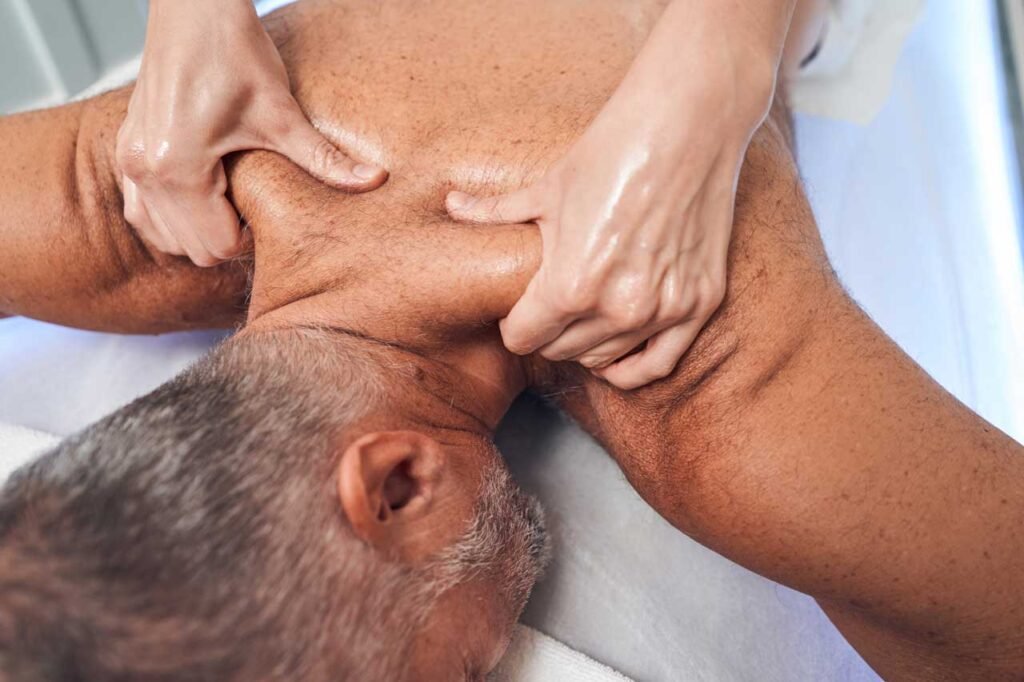
Neck stiffness, shoulder discomfort and difficulty turning your head can make everyday activities uncomfortable. You might notice symptoms when checking your blind spot while driving, working at a computer or looking down at your phone. One possible cause is cervical spondylosis, a condition involving age-related changes in the bones and discs of the neck.
Cervical spondylosis becomes more common as people get older. These changes are often visible on imaging, even in people who have no pain or other symptoms. However, some individuals experience recurring neck discomfort, stiffness or headaches that affect their daily activities.
Although you cannot reverse normal age-related changes in the spine through exercise, appropriate movement, strengthening and activity adjustments may help manage symptoms and maintain function. Understanding your condition and finding a suitable management approach can help you remain active and work towards your everyday goals.
What Is Cervical Spondylosis?
The cervical spine consists of seven vertebrae in the neck. Between many of these bones are discs that help distribute loads and allow movement. Joints, ligaments and muscles also contribute to the neck’s stability and flexibility.
Cervical spondylosis describes age-related changes affecting the structures of the cervical spine. These may include changes to the discs, joints and surrounding bones.
For many people, these changes do not cause symptoms. In others, they may be associated with neck pain or stiffness. In some cases, changes in the spine can contribute to nerve compression or pressure on the spinal cord, which requires medical assessment.
Possible symptoms include:
Neck pain or stiffness.
Difficulty turning or tilting the head comfortably.
Discomfort around the shoulders or upper back.
Headaches that begin around the back of the neck.
Pain, tingling or numbness extending into an arm if a nerve is affected.
Not every symptom is caused by cervical spondylosis. A healthcare professional can assess your symptoms and determine whether further investigation is necessary.
7 Helpful Tips for Managing Cervical Spondylosis
1. Keep Your Neck Moving Comfortably
When your neck feels stiff, avoiding movement altogether may seem like the easiest option. However, prolonged inactivity can make it more difficult to maintain comfortable movement and everyday function.
Gentle neck movements within a comfortable range may help you maintain mobility. Depending on your symptoms, this might involve slowly turning your head from side to side or gently looking up and down without forcing the movement.
Start gradually and avoid pushing into sharp or increasing pain.
If movement causes pain that travels down your arm, new numbness or weakness, stop the aggravating movement and seek professional advice.
The aim is to maintain comfortable movement rather than force your neck into a particular position.
2. Take Regular Breaks From Computer Work
Spending long periods at a desk can contribute to discomfort, particularly when you remain in one position for an extended time.
If you work at a computer, consider these practical adjustments:
Position your screen at a comfortable viewing height.
Keep your keyboard and mouse within easy reach.
Support your arms when practical.
Change position regularly.
Take short movement breaks throughout the day.
You do not need to maintain a perfectly upright posture every minute. Changing positions regularly and finding a comfortable working arrangement can be more practical than holding one rigid position.
If neck pain consistently interferes with your work, a physiotherapist may help you identify useful adjustments based on your symptoms and daily routine.
3. Choose a Comfortable Sleeping Position
Neck stiffness may be more noticeable when you wake up, especially if your sleeping position or pillow is uncomfortable.
Choose a pillow that supports your head and neck without forcing them excessively forwards or sideways. Sleeping on your back or side may be comfortable for some people, but individual preferences vary.
If you regularly wake with neck discomfort, try adjusting your pillow height or sleeping position and see whether this improves your comfort.
There is no single pillow or sleeping position that works for everyone with cervical spondylosis.
If pain repeatedly interrupts your sleep or becomes progressively worse, consider seeking medical or physiotherapy assessment.
4. Strengthen Your Neck and Upper Back Gradually
The muscles around your neck, shoulders and upper back contribute to movement and support during everyday activities.
Depending on your assessment, a physiotherapist may recommend exercises to improve strength, endurance and control.
An individualised programme may include:
Gentle neck movement exercises.
Shoulder blade control exercises.
Upper back strengthening.
Exercises to improve tolerance for desk work and daily activities.
Gradual progression towards your usual physical activities.
The appropriate exercises depend on your symptoms, strength and physical abilities. Do not assume that every person with cervical spondylosis needs the same strengthening routine.
Begin at a manageable level and increase the difficulty gradually. Stop and seek advice if exercises cause new neurological symptoms or significantly worsen your pain.
5. Stay Active Within Your Comfort Level
Regular physical activity supports general health and can help maintain strength, mobility and independence as you age.
If you have cervical spondylosis, you may still be able to enjoy walking, swimming, cycling or other activities that feel comfortable.
Choose activities that suit your current abilities and adjust their intensity if symptoms flare up. You may find it helpful to divide demanding activities into shorter sessions and gradually build up your tolerance.
You do not automatically need to avoid exercise because an X-ray or scan shows age-related changes in your neck.
However, if you have significant pain, new weakness, problems with balance or other concerning symptoms, seek medical assessment before increasing your activity level.
6. Manage Everyday Activities Without Overloading Your Neck
Certain tasks may aggravate neck discomfort, including prolonged phone use, carrying heavy objects or repeatedly looking upwards.
If these activities increase your symptoms, consider changing how you perform them.
For example, you could raise your phone closer to eye level, take breaks during tasks that require looking upwards or divide heavy household tasks into smaller sessions.
These changes may help reduce unnecessary discomfort while allowing you to remain active.
The goal is not to avoid every movement that causes mild discomfort. Instead, identify activities that repeatedly aggravate your symptoms and find practical ways to manage them.
If symptoms continue despite these adjustments, seek professional guidance.
7. Seek Physiotherapy or Medical Advice When Needed
Persistent neck pain and stiffness can have several causes. A professional assessment can help determine whether your symptoms are consistent with cervical spondylosis or whether another condition needs to be considered.
A physiotherapist may ask about your symptoms, medical history, daily activities and previous injuries. Depending on your presentation, they may assess neck movement, muscle strength and relevant functional tasks.
Treatment may include exercise guidance, activity modification, education and a plan for gradually returning to your usual activities.
Medical assessment may be necessary if symptoms suggest nerve compression, spinal cord involvement or another condition that requires further investigation.
You can explore available care through the PAX Physiotherapy Services page.
How Can Physiotherapy Help With Cervical Spondylosis?
Physiotherapy may help people with symptomatic cervical spondylosis manage discomfort, maintain movement and improve their ability to perform daily activities.
Treatment should be based on an individual assessment rather than the imaging findings alone.
Individual Assessment
Your physiotherapist may review your symptoms, neck movement, strength and functional difficulties. They may also ask whether you experience headaches, arm symptoms or problems with everyday activities.
If your symptoms suggest a more serious problem, you may be advised to seek medical assessment before starting rehabilitation.
Exercise and Movement Guidance
An appropriate exercise programme may help maintain comfortable movement and improve the strength and endurance needed for everyday activities.
Exercises should be adjusted according to your symptoms and abilities, with gradual progression as your tolerance improves.
Activity Modification and Education
Practical advice about desk work, sleeping comfort, physical activity and task management may help you manage symptoms during your normal routine.
Education can also help you understand that age-related changes on imaging do not necessarily indicate serious damage or mean that movement should be avoided.
Progress Monitoring
Your symptoms may change over time. Reviewing your progress helps determine whether the treatment plan remains appropriate or whether additional assessment is needed.
Physiotherapy cannot reverse age-related changes in the spine, and results vary between individuals. Its purpose is to help manage symptoms and improve function when appropriate.
For more information, visit the PAX Physiotherapy Exercise Rehabilitation page.
How Long Does Cervical Spondylosis Take to Improve?
Recovery depends on the cause and severity of your symptoms, your general health and the activities affected.
Some episodes of neck pain and stiffness improve over several weeks, although symptoms can return from time to time. Other people experience persistent discomfort and may benefit from ongoing self-management and professional guidance.
The structural changes associated with cervical spondylosis do not necessarily disappear when symptoms improve. Many people can remain active despite these changes.
If your symptoms do not improve after a few weeks, keep returning or interfere with your everyday activities, consider arranging a professional assessment.
When Should You Seek Medical Attention?
Most cases of neck stiffness do not represent a medical emergency, but certain symptoms require prompt attention.
Seek urgent medical assessment if you experience:
New or progressive weakness in an arm or leg.
Increasing difficulty walking or maintaining balance.
New problems with bladder or bowel control.
Increasing difficulty with hand coordination, such as repeatedly dropping objects.
Severe neck pain that begins suddenly or worsens rapidly.
Neck pain accompanied by significant neurological symptoms.
These symptoms may indicate nerve or spinal cord involvement or another serious condition.
If you develop sudden facial drooping, difficulty speaking or sudden weakness affecting one side of the body, call emergency services immediately.
Do not attempt to manage new or worsening neurological symptoms with neck exercises alone.
Frequently Asked Questions About Cervical Spondylosis
1. What causes cervical spondylosis?
Cervical spondylosis is associated with age-related changes in the discs, joints and bones of the neck. Previous injuries and family history may also contribute to the likelihood of developing these changes.
2. Is cervical spondylosis the same as a slipped disc?
No. Cervical spondylosis refers to broader age-related changes in the neck, while a slipped or herniated disc describes a particular disc problem. The conditions can occur together, but they are not identical.
3. Can physiotherapy help cervical spondylosis?
Physiotherapy may help manage pain and stiffness and improve movement and function. Depending on your assessment, treatment may include exercise, activity modification and education. Some symptoms require medical investigation before rehabilitation begins.
4. Should I avoid exercise if I have cervical spondylosis?
Not necessarily. Many people with cervical spondylosis can remain physically active. Choose activities that suit your symptoms and abilities, and seek professional guidance if you experience significant pain, arm weakness, balance problems or other concerning symptoms.
5. Can cervical spondylosis cause headaches?
Neck-related problems can contribute to headaches that begin around the back of the head or neck. However, headaches have many possible causes, so persistent, unusual or severe headaches should be assessed appropriately.
6. Does cervical spondylosis always get worse with age?
Age-related changes in the spine may progress over time, but symptoms do not necessarily worsen in parallel. Many people have cervical spondylosis without experiencing pain or significant limitations.
7. When should I see a physiotherapist for neck stiffness?
Consider an assessment if neck pain or stiffness persists for several weeks, keeps returning or interferes with your daily activities. Seek urgent medical attention for new weakness, worsening numbness, difficulty walking or other neurological warning signs.
Get Support for Neck Pain and Stiffness at PAX Physiotherapy
Neck pain and stiffness can affect your ability to work, drive, sleep and enjoy everyday activities. Understanding your symptoms and choosing appropriate care can help you work towards maintaining comfortable movement and function.
PAX Physiotherapy provides physiotherapy services in Modbury North, South Australia, with care tailored to individual symptoms and rehabilitation goals.
If neck discomfort is affecting your daily routine, visit the PAX Physiotherapy contact page to enquire about an appointment.
Clinic address: Unit 2/438 Montague Road, Modbury North SA 5092
Phone: 08 8333 8333
Mobile: 0499 999 636
Disclaimer: This article provides general health information and is not a substitute for an individual assessment, diagnosis or medical advice. Seek appropriate medical care if symptoms are severe, persistent or worsening.
