

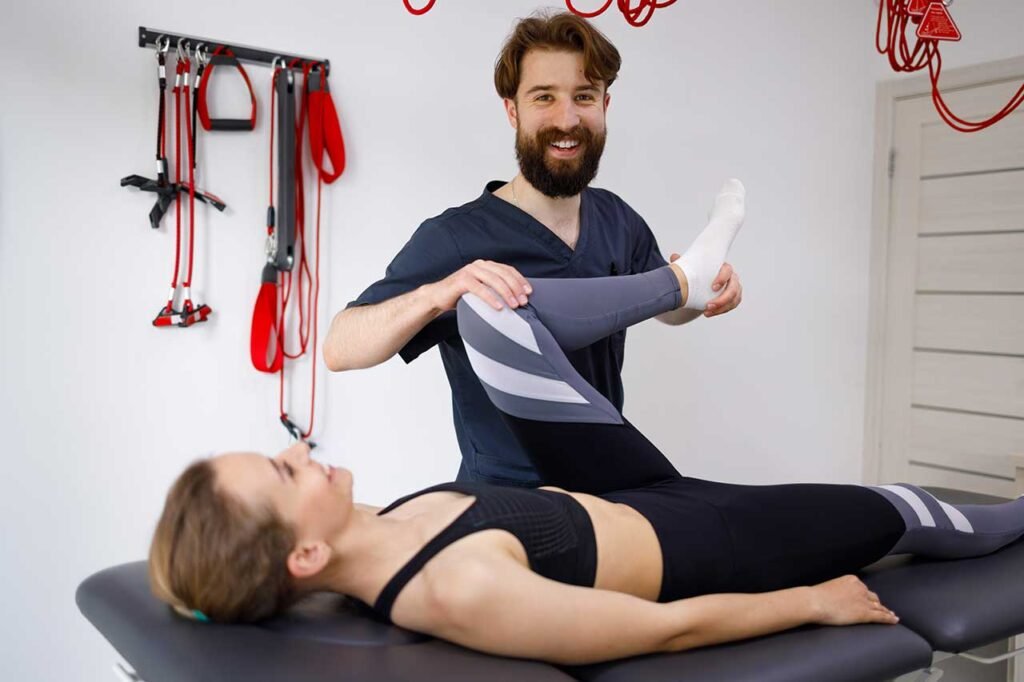
Do you experience knee pain, swelling, or difficulty bending your knee after twisting your leg during sports or everyday activities? These symptoms may be associated with a meniscus tear, a common injury affecting the cartilage inside the knee joint.
The meniscus plays an important role in cushioning the knee, distributing body weight, and supporting joint stability. When this cartilage becomes damaged, activities such as walking, squatting, climbing stairs, and playing sports may become uncomfortable.
A meniscus tear can happen suddenly during physical activity or develop gradually due to age-related changes in the joint.
If knee pain is affecting your daily activities in Modbury North or surrounding Adelaide suburbs, understanding the condition and available treatment options can help you take appropriate steps towards recovery.
In this guide, we explore the causes, symptoms, and seven helpful tips for managing a meniscus tear.
What Is a Meniscus Tear?
A meniscus tear is an injury to one or both of the two C-shaped pieces of cartilage located inside the knee joint.
Each knee has two menisci:
Medial meniscus: Located on the inner side of the knee.
Lateral meniscus: Located on the outer side of the knee.
These structures sit between the thighbone (femur) and shinbone (tibia).
The menisci help to:
Distribute pressure across the knee joint.
Absorb shock during movement.
Improve joint stability.
Support smooth knee movement.
Protect the joint surfaces during weight-bearing activities.
When a meniscus becomes torn, it may cause pain, swelling, stiffness, and difficulty moving the knee.
Common Types of Meniscus Tears
Meniscus tears can occur in different shapes and locations.
Some common types include:
Radial tear: A tear extending from the inner edge towards the outer part of the meniscus.
Horizontal tear: A tear that separates the meniscus into upper and lower portions.
Longitudinal tear: A tear that runs along the length of the meniscus.
Bucket-handle tear: A larger longitudinal tear where part of the cartilage may move into the centre of the knee joint.
Flap tear: A portion of the meniscus becomes displaced and may cause mechanical symptoms.
The location, size, and type of tear can influence treatment decisions and recovery.
Common Causes and Risk Factors of a Meniscus Tear
A meniscus tear can develop following an injury or as a result of gradual changes in the cartilage.
1. Sudden Twisting Movements
One of the common causes is twisting the knee while the foot remains planted on the ground.
This can happen during:
Football or basketball.
Tennis and other court sports.
Sudden changes in direction.
Pivoting movements.
Incorrect landing after jumping.
2. Age-Related Changes
As people get older, the meniscus may gradually become weaker and less flexible.
This can make it more vulnerable to tearing during relatively minor movements, such as standing up from a chair or turning while walking.
3. Repetitive Squatting and Kneeling
Activities involving repeated deep squatting, kneeling, or heavy lifting may place additional demands on the knee.
Over time, these movements may contribute to meniscal damage, particularly when combined with existing age-related changes.
4. Previous Knee Injuries
Previous injuries involving the knee ligaments or other joint structures may occur alongside meniscus damage.
An appropriate assessment can help identify whether more than one structure is affected.
Common Symptoms of a Meniscus Tear
Symptoms can vary depending on the location and severity of the injury.
Common signs include:
Knee pain: Discomfort along the inner or outer joint line.
Swelling: The knee may become swollen within hours or over the following days.
Stiffness: Bending or straightening the knee may become difficult.
Clicking sensations: You may notice clicking or catching during movement.
Knee locking: Some tears may cause difficulty fully straightening or bending the knee.
Giving-way sensation: The knee may feel unstable during walking or standing.
Reduced movement: Everyday activities such as squatting and climbing stairs may become uncomfortable.
Not every meniscus tear causes all these symptoms. Some tears are also visible on imaging in people who do not experience significant knee pain.
7 Helpful Tips for Managing a Meniscus Tear
The appropriate management approach depends on the type of tear, your symptoms, activity level, and overall knee health.
The following strategies may help manage symptoms and support recovery.
1. Reduce Activities That Aggravate Your Knee
During the early stages of an injury, avoid activities that significantly increase knee pain.
You may need to temporarily reduce:
Running and jumping.
Deep squatting.
Sudden turning movements.
High-impact sports.
Heavy lifting involving deep knee bending.
This does not mean avoiding all movement.
Try to maintain comfortable everyday movement within your tolerance, unless a healthcare professional advises otherwise.
2. Manage Swelling and Discomfort
Swelling may develop after a meniscus injury and make knee movement uncomfortable.
Some simple measures may help:
Apply a cold pack wrapped in a towel for short periods.
Elevate your leg when resting.
Consider comfortable compression if appropriate.
Avoid activities that noticeably increase swelling.
Do not apply ice directly to your skin.
If swelling is severe, rapidly increasing, or associated with significant pain, seek medical assessment.
3. Avoid Repeated Deep Squatting and Twisting
Deep knee bending combined with twisting can increase the demands placed on the meniscus.
While recovering, consider modifying activities such as:
Deep squats.
Kneeling for extended periods.
Sudden direction changes.
Pivoting on a planted foot.
Repeated twisting while carrying heavy objects.
As your symptoms improve, these movements may be gradually reintroduced through an appropriate rehabilitation programme.
4. Maintain Comfortable Knee Movement
Keeping the knee completely still for prolonged periods may contribute to stiffness and reduced muscle activity.
Once serious injury has been assessed, gentle movements may help maintain mobility.
Depending on your symptoms, suitable exercises may include:
Gentle knee bending and straightening.
Comfortable heel slides.
Quadriceps muscle contractions.
Straight-leg raises, if appropriate.
Gentle walking on a comfortable surface.
Avoid forcing your knee through painful movements.
If your knee is locked and you cannot fully straighten it, seek prompt medical assessment rather than trying to force it into position.
5. Strengthen the Muscles Supporting Your Knee
The muscles around the knee and hip help control lower-limb movement during walking, standing, and physical activity.
A suitable strengthening programme may include:
Quadriceps strengthening.
Hamstring strengthening.
Hip abductor exercises.
Gluteal strengthening.
Controlled sit-to-stand exercises.
Balance and stability training.
Exercises should begin at an appropriate level and progress gradually.
The aim is to improve muscle function and support your ability to perform everyday activities without excessive knee discomfort.
6. Consider Physiotherapy for Guided Rehabilitation
Physiotherapy may help people with a meniscus tear manage symptoms, improve knee movement, and rebuild strength.
A physiotherapist may assess:
Knee range of motion.
Swelling and tenderness.
Quadriceps and hamstring strength.
Hip and lower-limb movement.
Walking pattern.
Balance and stability.
Activities that increase your symptoms.
Depending on the assessment, treatment may include:
Mobility exercises.
Progressive strengthening.
Balance training.
Gait and movement training.
Activity modification advice.
Sport-specific rehabilitation where appropriate.
For example, someone who experiences knee pain while climbing stairs may benefit from a programme focusing on quadriceps strength, hip control, and gradual functional training.
7. Return to Physical Activity Gradually
Returning to sport or demanding physical activities too quickly may aggravate symptoms.
Before increasing activity, consider whether you can:
Walk comfortably.
Bend and straighten your knee adequately.
Perform suitable strengthening exercises.
Manage stairs without significant discomfort.
Maintain good control during basic movements.
A gradual return-to-activity programme may include:
Comfortable daily walking.
Basic mobility and strengthening exercises.
Controlled functional movements.
Gradual introduction of low-impact exercise.
Sport-specific movements when appropriate.
Return to higher-intensity activities when clinically suitable.
Progression should depend on symptoms, strength, movement quality, and professional advice.
How Is a Meniscus Tear Diagnosed?
Diagnosis usually begins with a discussion about your symptoms, medical history, and how the injury occurred.
A healthcare professional may ask:
Did the pain begin after a twisting movement?
Did you hear or feel a popping sensation?
When did swelling develop?
Does your knee catch or lock?
Can you fully bend and straighten your knee?
Which activities make the pain worse?
Physical Examination
A clinical examination may include:
Checking for tenderness along the knee joint line.
Assessing knee movement.
Evaluating swelling.
Testing muscle strength.
Assessing walking and balance.
Performing specific meniscus tests.
The McMurray test and Thessaly test may be used as part of the examination. These tests help assess symptoms associated with meniscal injuries, but no single physical test should be considered definitive on its own.
Imaging Tests
Depending on your symptoms and examination findings, imaging may be recommended.
X-ray: An X-ray does not show the meniscus directly, but it can help identify bone injuries and other causes of knee pain.
MRI: Magnetic resonance imaging provides detailed images of soft tissues, including the menisci, ligaments, and cartilage. It is commonly used when imaging is needed to assess an acute meniscus tear.
Not everyone with knee pain requires an MRI. The decision depends on the clinical findings and whether the result would influence treatment.
How Can Physiotherapy Help With a Meniscus Tear?
Physiotherapy may form an important part of non-surgical management and recovery following meniscus surgery.
The rehabilitation programme depends on the type of injury, symptoms, and whether surgery has been performed.
Early Rehabilitation
The initial focus may include:
Managing pain and swelling.
Restoring comfortable knee movement.
Maintaining appropriate muscle activity.
Improving walking ability.
Modifying activities that aggravate symptoms.
Strengthening and Movement Control
As symptoms allow, rehabilitation may progress to:
Quadriceps strengthening.
Hamstring exercises.
Hip strengthening.
Balance exercises.
Controlled weight-bearing activities.
Functional movement training.
Rehabilitation After Surgery
If surgery is required, physiotherapy may help restore knee movement, strength, balance, and functional ability.
The rehabilitation programme will depend on the procedure performed.
Recovery following meniscus repair is generally different from recovery following partial meniscectomy. A repair usually requires a more protective rehabilitation period because the repaired tissue needs time to heal.
Your surgeon and physiotherapist should guide the progression of exercises and weight-bearing activities.
Does a Meniscus Tear Always Require Surgery?
No. A meniscus tear does not automatically mean that surgery is necessary.
Many people can initially be managed with non-surgical approaches, depending on the type of tear and their symptoms.
Treatment options may include:
Activity modification.
Appropriate pain management.
Physiotherapy.
Progressive strengthening.
Movement rehabilitation.
Medical review and monitoring.
Surgery may be considered when symptoms persist, the tear is suitable for repair, or mechanical problems such as significant locking are present.
When surgery is required, preserving as much functional meniscus tissue as possible is generally an important consideration.
Treatment decisions should be made with an appropriate medical professional based on individual clinical findings.
When Should You Seek Medical Advice?
Seek professional assessment if you experience:
Persistent knee pain following a twisting injury.
Swelling that does not improve.
Difficulty bending or straightening your knee.
Repeated catching or locking sensations.
A knee that frequently gives way.
Difficulty returning to normal activities.
Seek urgent medical assessment if:
You cannot put weight on your leg after an injury.
Your knee is severely painful or significantly swollen.
You cannot bend or straighten your knee.
Your knee has changed shape.
Your knee becomes hot and swollen, particularly with fever.
A knee that is physically locked and cannot fully straighten requires prompt assessment.
Frequently Asked Questions About Meniscus Tears
1. Can a meniscus tear heal without surgery?
Some meniscus tears can improve with non-surgical management, including activity modification and physiotherapy. Whether a tear can heal depends on factors such as its location, type, and blood supply.
2. How do I know if I have a meniscus tear?
Common symptoms include knee pain, swelling, stiffness, clicking, catching, and difficulty bending or straightening the knee. A clinical assessment is needed to determine the likely cause.
3. Can I walk with a meniscus tear?
Some people can walk with a meniscus tear, while others experience significant pain or difficulty bearing weight. Avoid pushing through severe pain and seek assessment if walking is difficult.
4. How long does a meniscus tear take to recover?
Recovery varies depending on the tear, treatment approach, and individual circumstances. Symptoms may improve with conservative management, while recovery following meniscus repair can take several months.
5. Does physiotherapy help a meniscus tear?
Physiotherapy may help improve knee mobility, strength, balance, and functional movement. It can be used as part of non-surgical management and after appropriate surgical procedures.
6. Is a meniscus tear the same as knee osteoarthritis?
No. A meniscus tear involves damage to the cartilage structures inside the knee, while osteoarthritis involves changes affecting the joint cartilage and surrounding structures. Both conditions can occur together.
7. Can I return to sports after a meniscus tear?
Many people return to sports after appropriate treatment and rehabilitation. Return should be gradual and based on knee movement, strength, stability, symptoms, and professional guidance.
Knee Injury Rehabilitation in Modbury North, Adelaide
A meniscus tear can affect your ability to walk, exercise, climb stairs, and participate in sports.
Understanding the injury and following an appropriate management plan can help you work towards improving knee movement, strength, and everyday function.
PAX Physiotherapy, located in Modbury North, Adelaide, South Australia, provides physiotherapy and exercise rehabilitation services.
If you are experiencing ongoing knee pain or movement difficulties, contact the clinic to enquire about available physiotherapy services and suitable assessment options.
PAX Physiotherapy – Modbury North, Adelaide
Address: Unit 2, 438 Montague Road, Modbury North SA 5092
Phone: 08 8333 8333
Mobile: 0499 999 636
Email: admin@paxphysiotherapy.com.au
Website: https://paxphysiotherapy.com.au/
Medical Disclaimer
This article provides general educational information and is not a substitute for professional medical advice, diagnosis, or treatment. Knee pain and swelling can have several causes, and symptoms alone cannot confirm a meniscus tear. Consult a qualified healthcare professional for an appropriate assessment, particularly if you experience significant swelling, difficulty bearing weight, locking, or loss of knee movement.
