

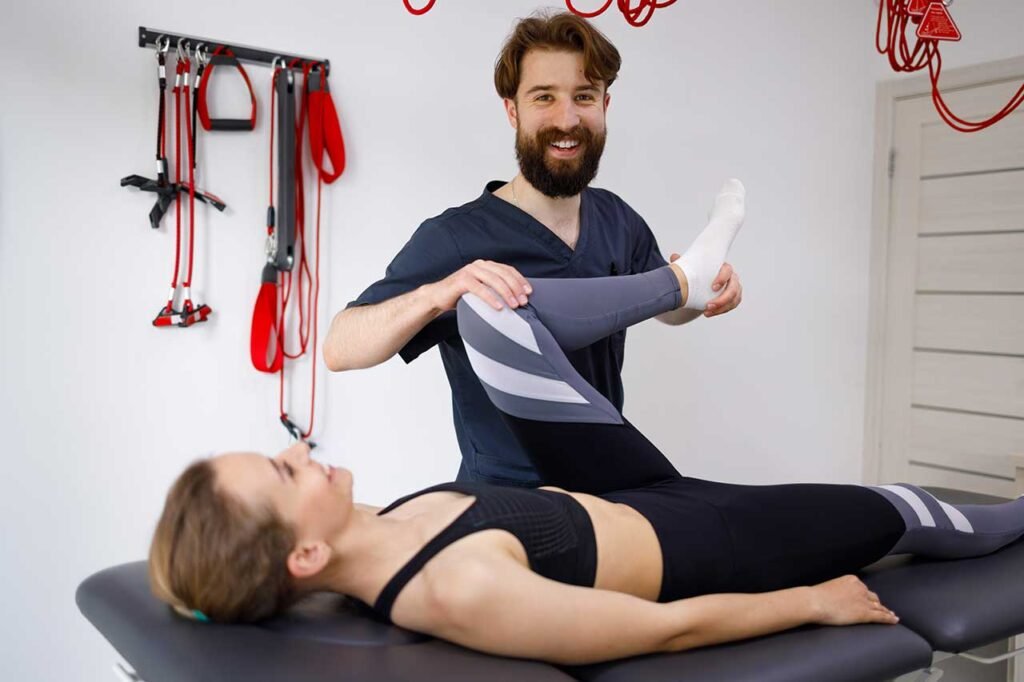
Have you recently twisted your ankle while walking, running or playing sports? Are you experiencing swelling, pain or difficulty putting weight on your foot? These symptoms may indicate an ankle sprain, one of the most common injuries affecting the foot and ankle.
An ankle sprain can happen during everyday activities, sports or even when walking on an uneven surface. Although some sprains are relatively mild, others can affect your mobility and take longer to recover.
Understanding ankle sprain recovery is important because returning to normal activities too quickly may increase the risk of further injury. With appropriate care, gradual strengthening and physiotherapy, many people can regain ankle movement, strength and stability.
What Is an Ankle Sprain?
An ankle sprain occurs when one or more ligaments supporting the ankle joint are stretched or torn. Ligaments are strong bands of tissue that connect bones and help stabilise joints.
The most common type is a lateral ankle sprain, which affects the ligaments on the outside of the ankle. It often happens when the foot rolls inwards unexpectedly.
An ankle sprain can range from mild ligament stretching to a more significant tear. The severity of the injury influences the recovery process and the rehabilitation required.
7 Common Symptoms of an Ankle Sprain
Symptoms can vary depending on the severity of the injury. Common signs include:
1. Pain Around the Ankle
Pain is often felt around the affected ligament, particularly when moving the foot, standing or walking.
2. Swelling
Swelling may develop shortly after the injury. The amount of swelling can vary depending on the extent of tissue damage.
3. Bruising or Discolouration
Some ankle sprains cause bruising around the ankle or foot. This may become more noticeable during the first few days.
4. Difficulty Walking
Putting weight on the affected foot may feel uncomfortable. More severe injuries can make walking difficult or impossible.
5. Reduced Ankle Movement
You may find it difficult to point your toes, pull your foot upwards or move your ankle comfortably.
6. Tenderness Around the Ligaments
The injured area may feel sensitive when touched or pressed, particularly around the outer ankle.
7. Ankle Instability
Your ankle may feel weak or as though it could give way when walking on uneven ground or changing direction.
What Causes an Ankle Sprain?
An ankle sprain usually occurs when the ankle moves beyond its normal range, placing excessive stress on the supporting ligaments.
Common causes include:
- Walking on uneven surfaces: Unexpected changes in ground level can cause the ankle to roll.
- Sports activities: Running, jumping, landing and changing direction quickly can increase the risk of ankle injuries.
- Incorrect landing: Landing awkwardly after a jump may place excessive pressure on the ankle ligaments.
- Unsuitable footwear: Footwear that does not suit the activity or environment may contribute to poor foot stability.
- Previous ankle injuries: A previous sprain can increase the likelihood of another injury, particularly if strength and balance have not fully recovered.
- Reduced ankle strength and balance: Limited muscle strength or balance may affect the ability to respond to unexpected ankle movements.
7 Effective Ways to Support Ankle Sprain Recovery
Recovering from an ankle sprain involves managing early symptoms and gradually restoring movement, strength and balance. The right approach depends on the severity of the injury.
1. Protect Your Ankle After the Injury
During the early stages, avoid activities that significantly increase pain or place unnecessary stress on the injured ankle.
Depending on the injury, temporary support such as an ankle brace, suitable footwear or crutches may be recommended.
However, prolonged complete immobilisation is not appropriate for every ankle sprain. A healthcare professional can advise whether support or restricted weight-bearing is necessary.
2. Manage Swelling and Discomfort
Swelling and discomfort are common after an ankle sprain. Some simple measures may help manage these symptoms.
- Elevate your foot when resting.
- Use a cold pack wrapped in a towel for temporary pain relief.
- Avoid prolonged standing if it increases swelling.
- Consider suitable compression if recommended by a healthcare professional.
Cold packs should never be placed directly against the skin. Compression should not cause numbness, tingling or changes in foot colour.
3. Begin Gentle Ankle Movement
When appropriate, gentle ankle movement can help restore mobility and reduce stiffness.
Some exercises that may be introduced during rehabilitation include:
- Ankle pumps: Slowly move your foot upwards and downwards.
- Ankle circles: Gently move your ankle in small circles.
- Toe movements: Move your toes comfortably to maintain movement.
Start within a comfortable range and avoid forcing the injured ankle. Your physiotherapist can advise when to begin these movements based on your injury.
4. Gradually Return to Weight-Bearing
Putting weight on your foot may initially be uncomfortable. However, for many uncomplicated ankle sprains, gradual weight-bearing as tolerated is an important part of recovery.
Consider the following principles:
- Start with short periods of standing or walking if comfortable.
- Use recommended support when necessary.
- Avoid limping excessively or forcing painful movements.
- Increase walking distance gradually as symptoms improve.
If you cannot comfortably bear weight, seek medical assessment rather than trying to push through the pain.
5. Strengthen Your Ankle Muscles
Strengthening the muscles around your ankle can improve support and help you return to everyday activities.
Depending on your recovery stage, a physiotherapist may recommend:
- Resistance-band ankle exercises.
- Calf raises.
- Controlled ankle movements against resistance.
- Foot and lower-leg strengthening exercises.
Begin with manageable resistance and increase gradually. Exercises should not cause significant or lasting increases in pain or swelling.
6. Improve Balance and Ankle Stability
Balance training is an important part of ankle rehabilitation. After a sprain, your ability to control the ankle and respond to changes in ground level may be reduced.
Suitable exercises may include:
- Standing with your feet together.
- Supported single-leg standing.
- Controlled weight-shifting exercises.
- Balance exercises on progressively challenging surfaces, when appropriate.
Always begin with a safe level of difficulty. Use a stable support nearby if needed, and progress under professional guidance.
7. Follow a Structured Physiotherapy Programme
Physiotherapy can help guide your recovery and reduce the risk of returning to demanding activities before your ankle is ready.
A physiotherapist may assess your ankle movement, swelling, strength, balance, walking pattern and functional ability.
Your rehabilitation programme may include:
- Individualised ankle mobility exercises.
- Progressive strengthening activities.
- Balance and coordination training.
- Walking and movement retraining.
- Sport-specific rehabilitation where required.
- Advice on suitable footwear and ankle support.
The aim is to restore the ankle’s ability to manage everyday movements and physical activities safely.
How Long Does Ankle Sprain Recovery Take?
The time required for ankle sprain recovery depends on the severity of the injury, the affected ligaments and your overall physical condition.
As a general guide:
- Mild sprains: Some people improve within a few weeks.
- Moderate sprains: Recovery may take several weeks or longer.
- Severe sprains: Recovery can take several months and may require a longer rehabilitation programme.
These are broad estimates rather than guaranteed recovery timelines. A more significant injury may take longer, and persistent symptoms should be assessed.
Returning to sport should depend on your strength, balance, movement and ability to perform activity-specific tasks, not just the number of weeks since the injury.
Why Is Balance Training Important After an Ankle Sprain?
An ankle sprain can affect more than the ligaments. It may also interfere with proprioception, which is your body’s ability to recognise joint position and movement.
When this ability is affected, you may find it harder to maintain stability while walking, running or changing direction.
Balance and coordination exercises can help improve your ability to control the ankle during movement.
Consistent rehabilitation is particularly important for people who participate in sports involving jumping, running and rapid changes of direction.
How Can Physiotherapy Help Prevent Repeated Ankle Sprains?
Experiencing one ankle sprain can increase the risk of future sprains, especially when the ankle remains weak or unstable.
Physiotherapy may help address contributing factors through:
- Improving ankle and calf muscle strength.
- Developing better balance and coordination.
- Restoring comfortable ankle movement.
- Improving control during walking and running.
- Gradually rebuilding confidence with physical activities.
- Providing guidance on returning to sports.
Rehabilitation should continue until the ankle can manage the physical demands of your usual activities, rather than stopping as soon as the pain reduces.
When Should You See a Physiotherapist or Doctor?
Consider seeking professional assessment if:
- Ankle pain or swelling is not improving.
- You continue to limp when walking.
- Your ankle feels unstable or repeatedly gives way.
- You have difficulty returning to exercise or sports.
- Your ankle movement remains restricted.
- You have experienced repeated ankle sprains.
Important: Not every ankle injury is a sprain. A fracture or other injury may cause similar symptoms. Seek prompt medical assessment if you cannot take four steps after the injury, have significant bone tenderness around the ankle or foot, or have severe pain or swelling. Seek urgent care if your foot becomes numb, cold, pale or blue, or if there is an obvious deformity or open injury.
Frequently Asked Questions About Ankle Sprain Recovery
1. Can I walk with a sprained ankle?
Many people with mild ankle sprains can walk with some discomfort. However, the appropriate level of weight-bearing depends on the injury. If you cannot walk or take four steps, seek medical assessment to rule out a more serious injury.
2. Should I use ice after an ankle sprain?
A cold pack wrapped in a towel may provide temporary pain relief. Avoid applying ice directly to your skin and stop if you experience discomfort or skin irritation.
3. When should I start ankle exercises?
Gentle movement may begin early when appropriate, but the timing and type of exercise depend on the injury. A physiotherapist can recommend suitable exercises and guide progression.
4. Can an ankle sprain heal without physiotherapy?
Some mild ankle sprains improve without formal physiotherapy. However, rehabilitation may be particularly helpful when you have ongoing weakness, balance difficulties, instability or difficulty returning to sport.
5. Why does my ankle still feel weak after the pain has improved?
Pain may settle before strength, balance and coordination have fully recovered. Progressive strengthening and balance exercises can help address these limitations.
6. Can I play sports after an ankle sprain?
You should return to sports when your ankle has recovered enough to tolerate running, jumping, landing and changing direction safely. A gradual, structured return-to-sport programme can help reduce the risk of reinjury.
7. Can an ankle sprain happen again?
Yes. Previous ankle sprains can increase the risk of another injury, particularly when ankle strength, balance and movement control have not fully recovered.
Take the Right Steps Towards Ankle Recovery
An ankle sprain can temporarily affect your ability to walk, exercise and enjoy everyday activities. However, the right rehabilitation approach can help restore movement, strength and stability.
Managing early symptoms, gradually increasing activity and completing appropriate strengthening and balance exercises are important parts of recovery.
If you are experiencing persistent ankle pain, weakness or instability, PAX Physiotherapy in Modbury North, Adelaide, can help assess your movement and discuss suitable rehabilitation options.
Contact our team to arrange an appointment.
PAX Physiotherapy
Unit 2, 438 Montague Road, Modbury North SA 5092
Phone: 08 8333 8333
Mobile: 0499 999 636
Email: admin@paxphysiotherapy.com.au
Website: PAX Physiotherapy
Disclaimer: This article provides general health information and is not a substitute for individual medical advice, diagnosis or treatment. Consult an appropriately qualified healthcare professional about your symptoms.
