

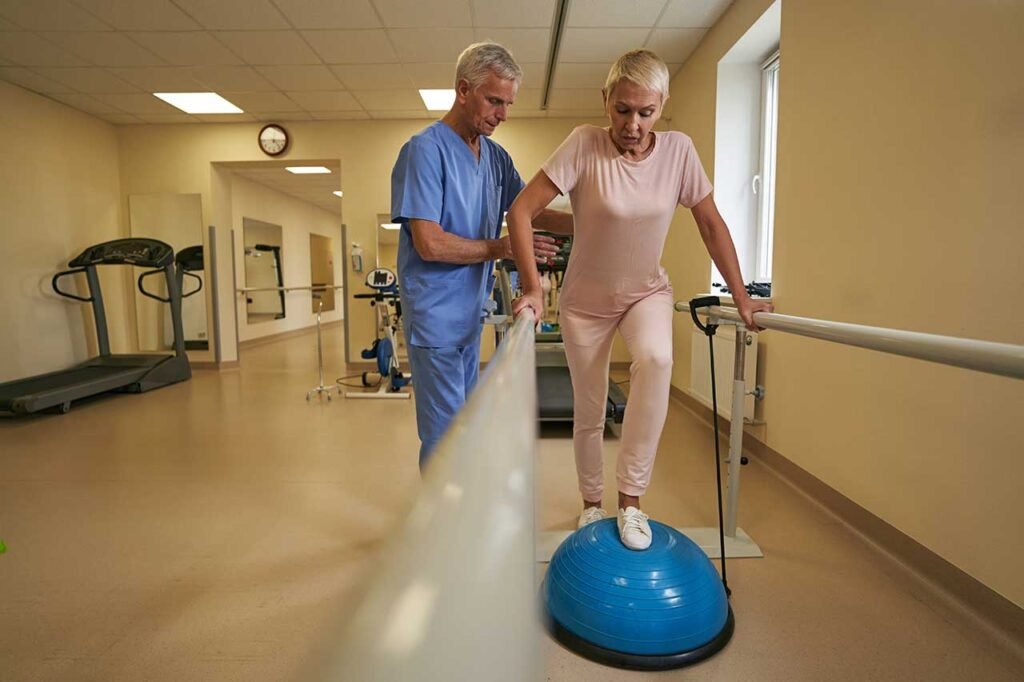
Hesitating before stepping off a curb, feeling your heart skip a beat when your foot catches slightly on the edge of a rug, or feeling a sense of unsteadiness when turning quickly in a narrow hallway are common moments of concern for many older adults. When a stumble occurs, it is natural to develop a lingering fear of falling, which often leads to cutting down on daily walks, avoiding social outings, or staying indoors. For local seniors, retirees, and caring families seeking clear guidance from physiotherapy in Modbury North, reclaiming steady footing does not require exhausting gym workouts or complex routines.
The most encouraging clinical reality is that balance is an active, trainable skill rather than an inevitable casualty of aging. Your balance relies on a coordinated three-part system: your eyes, the balance centers inside your inner ear (the vestibular system), and tiny position sensors (proprioceptors) in your ankles, feet, and spine. When you reduce daily activity out of worry, these systems become under-stimulated and the surrounding leg muscles lose stamina, making your footing feel less secure. At PAX Physiotherapy, located at Unit 2/438 Montague Road, our mission is to rebuild your lower-limb strength, sharpen your balance reflexes, and restore genuine confidence in every step.
The Three Hidden Reasons Balance Becomes Unsteady
Balance challenges rarely stem from a single issue. Instead, gradual shifts across everyday habits and body systems can slowly diminish stability:
Gradual Loss of Lower-Limb Strength: The muscles in your thighs, calves, and hips act as your physical brakes and accelerators. When muscles like the quadriceps and gluteals lose tone, pushing up from low armchairs or steadying yourself after a slight trip takes significantly more effort.
Sluggish Ankle and Foot Reflexes: The joints in your ankles contain sensory receptors that continuously detect micro-shifts in floor levels, prompting tiny calf adjustments that keep you upright. If your ankles are stiff or weakened by inactivity, those corrective reflexes fire more slowly.
Environmental Trip Hazards at Home: Poor lighting in corridors, loose mats, slippery bathroom tiles, or clutter along regular walking paths create unexpected hazards that challenge balance systems when you are fatigued.
Sedentary Habits and Hesitation: Restricting movement to “play it safe” creates a vicious cycle: less walking leads to weaker legs, which further heightens the sensation of unsteadiness.
Active balance and progressive strength training are proven to keep older adults independent and safe. The Australian Physiotherapy Association emphasizes that individualized, exercise-based physical rehabilitation is the single most effective intervention for reducing fall risk and maintaining mobility in community-dwelling seniors. Learn how our comprehensive mobility and balance evaluations assess fall risks on our Services page.
Four Safe, Everyday Balance Drills to Practice at Home
You can practice balance safely at home using everyday fixtures like a solid kitchen bench or a sturdy dining chair for hand support:
The Kitchen Bench Single-Leg Stand: While waiting for the kettle to boil, stand upright with your fingers resting lightly on the bench. Lift one foot a few centimeters off the floor and hold for 10 to 15 seconds. Switch sides. As your stability improves, challenge yourself to touch the bench with only one or two fingertips.
The Heel-to-Toe (Tandem) Stance: Stand alongside a stable counter. Place one foot directly in front of the other so the heel of your front foot touches the toes of your back foot. Hold this narrow base for 15 to 20 seconds, then switch feet. This retrains your ankles to handle narrow walking spaces.
Sit-to-Stand Chair Rises: Sit near the front edge of a sturdy dining chair with your feet flat on the floor. Lean your chest forward over your knees and stand up smoothly using your legs rather than pushing heavily through your arms. Slowly lower yourself back down with control. Aim for 5 to 10 repetitions to strengthen your quadriceps and glutes.
Supported Calf Raises: Stand facing your kitchen bench with both hands lightly resting on the surface. Slowly rise onto the balls of your feet, pause for two seconds at the top, and lower your heels back down smoothly. This builds the calf stamina needed to navigate slopes and curbs.
These simple, consistent drills reinforce stability and coordination, aligning with public health recommendations from Healthdirect Australia. Meet our experienced clinicians and discover our patient-first approach on our Our Therapists page.
Quick Home Safety and Stability Checklist
| Area of Concern | Hidden Hazard | Practical Fix to Try Today |
| Hallways and Bedrooms | Dim lighting during nighttime bathroom trips | Install motion-activated plug-in night lights along baseboards |
| Living Areas | Loose throw rugs and curled carpet edges | Remove loose rugs or secure them firmly with double-sided rug tape |
| Everyday Footwear | Backless slippers, smooth socks, or loose shoes | Wear supportive shoes with non-slip rubber soles and firm heel counters |
| Bathrooms | Slick floor tiles and slippery shower surfaces | Use non-slip suction mats and consider professionally installed grab rails |
| Rising from Chairs | Standing up too quickly causing lightheadedness | Pause for 10 seconds in a seated position before standing to allow blood pressure to equalize |
Discover more about our friendly clinic culture and patient-centered philosophy on our About Us page.
Long-Term Benefits of Choosing Physiotherapy in Modbury North
While home checks improve living spaces, structured physiotherapy in Modbury North provides the tailored conditioning and clinical support needed to keep you mobile, upright, and confident:
Gaining an objective, clear evaluation of your balance reflexes, gait speed, and lower-limb strength
Rebuilding the leg and hip muscle power needed to rise effortlessly from low chairs, cars, and garden beds
Sharpening your body’s natural balance reactions so you recover easily from unexpected bumps or uneven footpaths
Walking through busy shopping centers, local parks, and family events without anxiety or constant scanning of the ground
Reducing reliance on excessive walking aids through steady, guided progress
Maintaining your freedom, autonomy, and independence in your own home and local community
Book Your Mobility & Balance Assessment in Modbury North Today
If unsteadiness, fear of falling, or a recent stumble is making you feel cautious about daily activities, the dedicated team at PAX Physiotherapy is here to support you. Located conveniently on Montague Road, our clinic provides welcoming, evidence-based care for residents across Modbury North, Tea Tree Gully, Para Vista, and the greater northeastern Adelaide region.
Visit our Contact page to schedule your thorough initial consultation online, or explore our full range of therapies on our Services page to take the first step toward steady, confident steps.
Clinic Address: Unit 2/ 438 Montague Road, Modbury North SA 5092
Email: admin@paxphysiotherapy.com.au
Phone: 08 8333 8333
Mobile: 0499 999 636
