

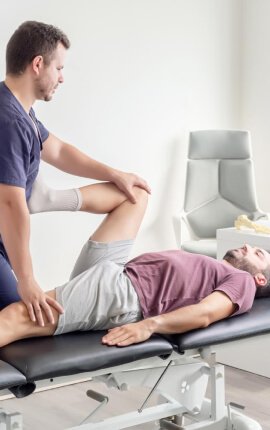
Stepping out of bed in the morning feeling as though your knees or hips are coated in rust, hearing an unsettling crunch or click when climbing stairs, or noticing that cold, rainy weather leaves your joints feeling tight and swollen are deeply familiar frustrations. When a doctor or scan mentions “osteoarthritis” or “wear and tear,” many patients immediately worry that their cartilage has completely worn away, that bone is grinding on bone, or that any form of exercise will speed up joint deterioration. For local community members seeking practical guidance from physiotherapy in Modbury North, discovering the true nature of joint health is the first step toward lasting peace of mind.
The most reassuring clinical reality is that joints are living, adaptable organs—not inanimate car tires that simply wear down with mileage. Your cartilage contains no direct blood supply; it depends entirely on the compression and release of gentle movement to draw in nutrient-rich synovial fluid, much like a sponge soaking up water. Complete rest or avoiding movement starves the joint surfaces, weakens the surrounding shock-absorbing muscles, and causes tissues to feel tighter. At PAX Physiotherapy, situated at Unit 2/438 Montague Road, we show you how structured, low-impact activity keeps your joints lubricated, resilient, and comfortable.
What Actually Happens During an Osteoarthritis Flare-Up?
Osteoarthritis is better understood as a whole-joint repair process rather than simple wear and tear. A flare-up is a temporary spike in sensitivity, not sudden joint destruction:
Temporary Capsular and Synovial Irritation: The inner lining of the joint capsule (the synovium) produces lubricating fluid. If you spend extra hours gardening, walk on steep ground, or catch an awkward step, the lining can become temporarily irritated, producing excess fluid that makes the joint feel swollen and heavy.
Protective Muscular Tightness: Muscles surrounding an achy joint—such as the quadriceps around the knee or the glutes around the hip—tend to tighten defensively. This increases continuous pressure across the joint surfaces, making normal bending feel restricted.
Sensitivity to Temperature and Barometric Shifts: Changes in weather often alter tissue pressure, causing sensitive nerve endings around stiff joint capsules to fire more readily.
Natural Desensitization: Just like a sunburn or a sprained ligament, flare-ups follow a predictable curve. With measured loading and calm pacing, sensitive joint tissues settle back down to baseline.
Conservative, movement-based care is universally recognized as the foundation of arthritis health. The Australian Physiotherapy Association emphasizes that structured, land-based exercise and weight management provide far greater long-term pain reduction and functional improvement than passive treatments alone. Learn how our comprehensive physical assessments evaluate joint mechanics and muscle support on our Services page.
The Four Golden Rules for Calming an Arthritis Flare-Up at Home
When a knee, hip, or lower back joint becomes swollen, sore, or cranky, follow these practical steps to settle the reaction without losing your hard-earned mobility:
Modify, Don’t Stop: Replace high-impact pounding with smooth, rhythmic movement. If walking briskly along footpaths feels uncomfortable, switch to gentle flat walks, stationary cycling, or pool-based movement to keep fluid circulating without jarring impact.
Use the “Two-Hour Pain Rule”: Discomfort during activity is acceptable as long as it stays mild (under 3 or 4 out of 10). If your joint feels noticeably more painful or swollen two hours after you stop, you likely did slightly too much—scale back the duration or intensity next time rather than stopping altogether.
Apply Comforting Warmth Before, Cool Packs After: Gentle heat across tight thigh, hip, or back muscles before getting moving relaxes muscular guarding. If the joint feels warm, puffy, or throbbing after activity, 15 minutes with a towel-wrapped cold pack helps calm the reaction.
Maintain Joint Lubrication Throughout the Day: Avoid sitting in one position for longer than 45 minutes. Simple non-weight-bearing movements—like seated leg extensions or gentle ankle circles—pump fluid across cartilage surfaces while watching TV or working.
These strategies protect your cartilage while maintaining daily independence, consistent with joint management advice from Healthdirect Australia. Meet our experienced clinicians and discover our patient-first approach on our Our Therapists page.
Daily Arthritis Troubleshooting Guide
| Common Symptom | What It Means | Helpful Strategy to Try |
| Morning “Stiff Knee” for First 15 Mins | Synovial fluid is cold and thickened from inactivity | Perform 20 gentle seated knee bends before stepping out of bed, followed by a warm shower |
| Clicking, Grinding, or Popping (Crepitus) | Normal variations in cartilage texture and tendon glide | Harmless if painless; keep moving to distribute natural joint lubricant |
| Ache When Descending Stairs | Quadriceps muscle fatigue transferring load to knee joint | Lead down with the unaffected leg first and use the handrail for steady balance |
| Deep Hip Ache After Standing Still | Sustained static compression on hip cartilage | Shift weight gently between feet or rest one foot on a low step to relieve pressure |
| Post-Gardening Swelling | Joint lining irritated by prolonged kneeling or bending | Take 10-minute sit breaks, use a cushioned garden kneeler, and ice the joint afterward |
Discover more about our friendly clinic culture and patient-centered philosophy on our About Us page.
Long-Term Benefits of Choosing Physiotherapy in Modbury North
While home modifications help manage flare-ups, structured physiotherapy in Modbury North provides the tailored strength and guidance needed to keep your joints functioning smoothly for years to come:
Gaining an accurate, jargon-free understanding of your joint health that removes fear and uncertainty
Rebuilding the muscular “shock absorbers” around your hips, knees, and spine so they handle everyday forces effortlessly
Learning how to pace gardening, shopping trips, and exercise so you avoid recurring post-activity flare-ups
Receiving gentle hands-on therapy to relieve stubborn muscular spasms and restore comfortable joint mobility
Reducing reliance on daily pain medications, joint rubs, or restrictive braces
Maintaining lifelong confidence, balance, and independence in your own home and community
Book Your Joint Assessment in Modbury North Today
If joint stiffness, clicking knees, or an arthritis flare-up is holding you back from enjoying your daily walks and hobbies, the dedicated team at PAX Physiotherapy is here to help. Located conveniently on Montague Road, our clinic provides welcoming, evidence-based care for residents across Modbury North, Tea Tree Gully, Para Vista, and the greater northeastern Adelaide region.
Visit our Contact page to schedule your thorough initial consultation online, or explore our full range of therapies on our Services page to take the first step toward lasting joint comfort.
Clinic Address: Unit 2/ 438 Montague Road, Modbury North SA 5092
Email: admin@paxphysiotherapy.com.au
Phone: 08 8333 8333
Mobile: 0499 999 636
