

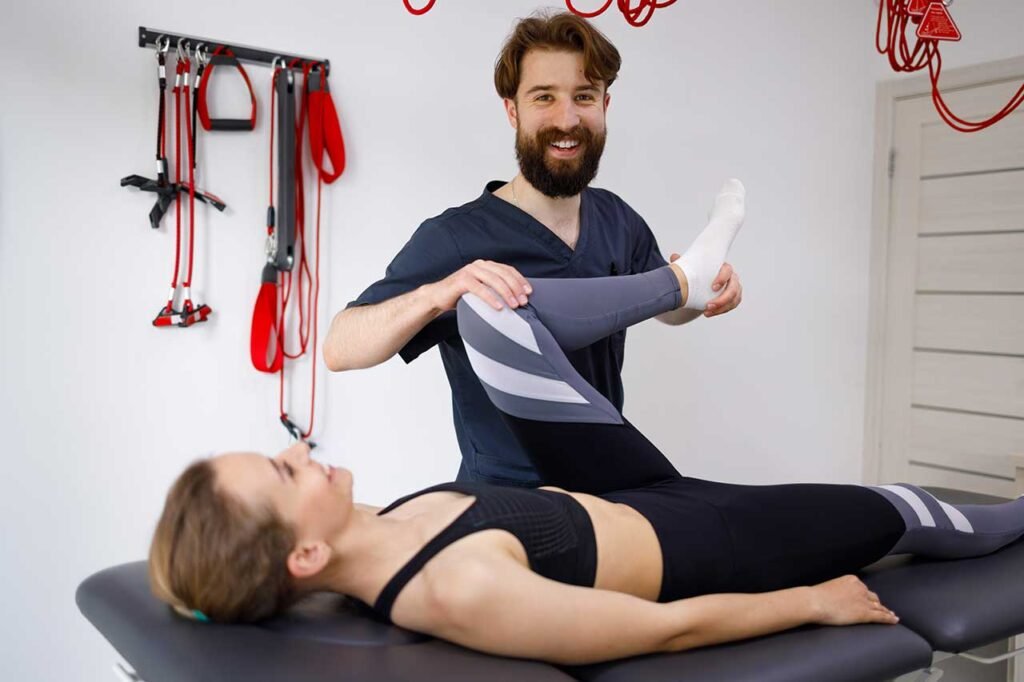
Burning, tingling, or numbness along the outer thigh can make walking, standing, and completing everyday activities uncomfortable. One possible cause is meralgia paresthetica, a condition that occurs when a sensory nerve supplying the skin of the outer thigh becomes compressed or irritated.
People with meralgia paresthetica may experience a burning sensation, unusual skin sensitivity, or reduced sensation in a specific area of the thigh. Symptoms often affect one side of the body and may become more noticeable during prolonged standing or walking.
The condition is commonly associated with pressure around the groin, including pressure from tight clothing, heavy belts, or changes in body weight. However, similar symptoms can occur with other nerve and spinal conditions, so an accurate assessment is important.
In this guide, we explore seven practical tips for managing meralgia paresthetica, ways to reduce pressure on the affected nerve, and when to seek professional advice.
What Is Meralgia Paresthetica?
Meralgia paresthetica is a nerve compression condition involving the lateral femoral cutaneous nerve. This nerve carries sensory information from the skin of the outer and upper thigh to the brain.
The nerve travels through the pelvis and passes near the groin before supplying sensation to the thigh. Pressure or irritation along this pathway can cause unusual sensations in the area it serves.
Unlike nerves that control muscles, the lateral femoral cutaneous nerve is a sensory nerve. Meralgia paresthetica therefore typically affects sensation rather than muscle strength.
Possible contributing factors include:
Wearing tight trousers, belts, or restrictive clothing.
Increased pressure around the abdomen or groin.
Recent weight gain.
Pregnancy.
Injury or pressure near the hip and groin.
Certain repetitive activities or prolonged positions.
Having one or more of these factors does not automatically mean you have meralgia paresthetica. A healthcare professional can assess your symptoms and check for other possible causes.
Common Symptoms of Meralgia Paresthetica
Symptoms usually affect the outer part of one thigh, although the exact location and severity can vary.
Common symptoms include:
Burning pain: A burning or stinging sensation over the outer thigh.
Tingling: Pins-and-needles sensations in the affected area.
Numbness: Reduced sensation in a patch of skin.
Skin sensitivity: Discomfort when clothing brushes against the thigh or when the skin is touched lightly.
Activity-related discomfort: Symptoms that become more noticeable during prolonged standing or walking for some people.
The symptoms may remain confined to the skin of the thigh. Significant muscle weakness is not typical of isolated meralgia paresthetica because the affected nerve does not control the leg muscles.
If you experience weakness, symptoms extending beyond the usual area, substantial back pain, or changes in your walking ability, seek medical assessment. These features may indicate another condition that requires investigation.
7 Helpful Tips for Managing Meralgia Paresthetica
The following strategies may help reduce pressure on the affected nerve and manage symptoms. Their suitability depends on the cause and severity of your condition.
1. Wear Loose and Comfortable Clothing
Tight clothing can place pressure around the waist and groin, where the lateral femoral cutaneous nerve passes into the thigh.
Reducing this pressure is one of the simplest measures you can try if your symptoms are associated with restrictive clothing.
Consider the following adjustments:
Choose trousers that do not tightly compress your waist or groin.
Avoid belts that need to be fastened excessively tightly.
Choose comfortable clothing for prolonged sitting or standing.
Avoid carrying heavy items on a tight waist belt if they aggravate your symptoms.
Notice whether your symptoms change when you wear less restrictive clothing.
You do not necessarily need to replace your entire wardrobe. Start by identifying items that create pressure around the affected area.
If your symptoms persist despite these changes, arrange a medical assessment rather than assuming clothing is the only cause.
2. Reduce Direct Pressure Around the Waist and Groin
Pressure around the front of the hip and groin may irritate the nerve in people with meralgia paresthetica.
Review your everyday activities and consider whether equipment, clothing, or repeated positions could be contributing to your symptoms.
For example, if you regularly wear a tool belt or heavy equipment around your waist, consider whether it can be adjusted or carried differently.
You may also find it helpful to:
Avoid tightly fastening belts around your waist.
Adjust work equipment to minimise pressure near the groin.
Change positions if a particular position consistently aggravates symptoms.
Avoid repeatedly pressing or rubbing the sensitive area.
Discuss persistent symptoms with a healthcare professional.
The aim is to reduce unnecessary pressure without placing excessive restrictions on your normal activities.
3. Modify Activities That Aggravate Your Symptoms
Some people notice increased burning or tingling during prolonged standing, walking, or activities that involve sustained hip positioning.
You do not necessarily need to stop exercising or avoid walking. Instead, pay attention to which activities increase your symptoms and adjust them where practical.
Helpful strategies may include:
Breaking long walks into shorter sessions.
Taking brief breaks during prolonged standing.
Alternating between different comfortable activities.
Gradually increasing activity as your symptoms allow.
Avoiding movements that consistently cause significant or worsening discomfort.
Keep in mind that activity-related symptoms can have several causes. If walking becomes increasingly difficult or symptoms spread beyond the outer thigh, seek professional assessment.
A healthcare professional can help determine whether your activity pattern is consistent with meralgia paresthetica or whether another condition needs to be considered.
4. Review Your Sitting and Standing Positions
Your everyday positions may influence how comfortable you feel, particularly if symptoms become noticeable after remaining in one position for a long time.
There is no single posture that everyone must maintain. Instead, focus on comfortable positioning and regular movement.
You could try:
Changing position periodically during desk work.
Taking short breaks from prolonged sitting.
Avoiding waistbands that compress your abdomen while seated.
Adjusting your chair so that you can sit comfortably.
Noticing whether prolonged standing consistently aggravates symptoms.
If a particular position causes burning or tingling, avoid repeatedly forcing yourself to remain in it.
However, do not assume that posture alone is responsible for the condition. Meralgia paresthetica involves nerve irritation or compression, and the underlying cause should be considered when planning management.
5. Maintain a Manageable Level of Physical Activity
Staying active can support general health, mobility, and physical conditioning. The appropriate level of activity depends on your symptoms and any other health conditions.
If comfortable, you may be able to continue ordinary activities such as walking or gentle exercise while making adjustments to avoid aggravating the affected area.
To manage your activity level:
Start with an amount of movement you can tolerate comfortably.
Increase the duration gradually rather than making sudden changes.
Take breaks when symptoms become more noticeable.
Avoid pushing through severe or worsening nerve pain.
Seek advice if symptoms repeatedly interfere with exercise.
If excess body weight is contributing to pressure around the groin, a healthcare professional may discuss sustainable weight-management options where appropriate. Weight loss is not necessary or suitable for everyone, and symptom management should be individualised.
If you have other medical conditions or unexplained thigh symptoms, seek advice before beginning a new exercise programme.
6. Ask Whether Physiotherapy or Other Treatment Is Appropriate
The role of physiotherapy in meralgia paresthetica depends on the individual. Some people may benefit from assessment and guidance on activity modification or associated movement problems, but physiotherapy is not a proven standalone treatment for every case of nerve compression.
A healthcare professional may assess the location of your symptoms, your movement, and whether another condition could be responsible.
Depending on the findings, your management plan may include:
Identifying activities or equipment that place pressure on the nerve.
Reviewing comfortable movement and daily activity.
Addressing associated hip or back problems when present.
Developing an appropriate activity plan.
Referring you for further medical assessment if symptoms suggest another cause.
Treatment may also involve medical options for persistent nerve pain. In selected cases, a doctor may consider an injection or specialist referral.
Surgery is rarely needed, but may be considered for severe, persistent symptoms that have not improved with other treatments.
At PAX Physiotherapy in Modbury North, you can enquire about available physiotherapy services and whether an assessment may be appropriate for your movement-related concerns. A physiotherapy assessment should not replace medical evaluation when the cause of your nerve symptoms is uncertain.
7. Monitor Symptoms and Know When to Seek Medical Help
Meralgia paresthetica may improve when pressure on the affected nerve is reduced. However, persistent thigh numbness or burning pain should not be ignored, particularly when the diagnosis has not been established.
Arrange a medical assessment if:
Burning pain or numbness persists.
Symptoms become more severe or spread.
The discomfort interferes with sleep, work, or daily activities.
You develop significant back or hip pain.
Symptoms do not improve after reducing obvious sources of pressure.
Seek prompt medical assessment if you develop new or progressive leg weakness, difficulty walking, or other significant neurological symptoms. These are not typical features of isolated meralgia paresthetica.
Seek emergency medical care if new leg weakness occurs with loss of bladder or bowel control, numbness around the groin or saddle area, or rapidly worsening neurological symptoms.
Early assessment can help identify the cause of your symptoms and determine whether you need further tests or treatment.
How Is Meralgia Paresthetica Diagnosed?
A healthcare professional will usually begin by asking about your symptoms, medical history, daily activities, and any factors that may be putting pressure on the nerve.
The assessment may include checking the location of numbness or altered sensation and examining leg strength, reflexes, and other neurological signs.
Because several conditions can cause thigh pain or numbness, the clinician may also assess your back and hip.
In some cases, further investigations may be recommended to rule out other causes. These might include imaging or nerve tests, depending on your symptoms and examination findings.
Not everyone requires imaging or specialised nerve testing. The decision depends on the clinical assessment and whether another diagnosis needs to be investigated.
Obtaining an accurate diagnosis is important because treatment for meralgia paresthetica may differ from treatment for a spinal nerve problem or another cause of thigh symptoms.
How Long Does Meralgia Paresthetica Take to Improve?
Recovery varies from person to person. Some cases improve over a period of weeks or months, particularly when the contributing pressure can be reduced.
Symptoms may persist for longer when the nerve remains irritated or when the underlying cause has not been identified.
During recovery, you may find it helpful to:
Wear less restrictive clothing.
Reduce avoidable pressure around the groin.
Adjust activities that consistently aggravate symptoms.
Follow the advice provided by your healthcare professional.
Seek reassessment if symptoms persist or worsen.
There is no guaranteed recovery timeline. Persistent or severe symptoms may require medical treatment beyond simple activity changes.
Frequently Asked Questions About Meralgia Paresthetica
1. What does meralgia paresthetica feel like?
Meralgia paresthetica commonly causes burning pain, tingling, numbness, or increased skin sensitivity along the outer thigh. Symptoms often affect one side and may become more noticeable during certain activities.
However, these symptoms can also occur with other nerve or spinal conditions, so an assessment may be necessary to establish the cause.
2. What causes meralgia paresthetica?
The condition occurs when the lateral femoral cutaneous nerve is compressed or irritated. Possible contributing factors include tight clothing, restrictive belts, increased pressure around the groin, pregnancy, weight gain, or injury.
In some cases, the exact cause is not obvious.
3. Can tight clothing cause burning thigh pain?
Yes. Tight clothing and belts can place pressure near the nerve and contribute to meralgia paresthetica. Wearing looser clothing may help when external pressure is a contributing factor, although it will not address every possible cause of thigh pain.
4. Is walking safe if I have meralgia paresthetica?
Walking may be comfortable for many people, but some notice increased symptoms during prolonged walking or standing. Adjust the duration according to your comfort and seek advice if symptoms worsen, spread, or interfere with normal movement.
5. Can physiotherapy cure meralgia paresthetica?
Physiotherapy is not a proven standalone treatment for every case. An assessment may help identify associated movement problems and practical ways to modify activities, but management should be based on the underlying cause. Medical treatment may be necessary for persistent symptoms.
6. Can meralgia paresthetica go away on its own?
Yes. Some cases improve over time, particularly when pressure on the nerve is reduced. However, recovery is not guaranteed, and persistent or worsening symptoms should be assessed by a healthcare professional.
7. When should I see a doctor for thigh numbness?
Arrange an assessment if thigh numbness persists, worsens, or affects your daily activities. Seek prompt care for new weakness or difficulty walking. New bladder or bowel dysfunction, saddle-area numbness, or rapidly worsening neurological symptoms require emergency assessment.
Get Support for Movement-Related Concerns at PAX Physiotherapy
Burning thigh pain and numbness can affect your comfort during walking, work, and everyday activities. Understanding the possible cause of your symptoms is an important step towards choosing appropriate management.
If you are experiencing persistent thigh discomfort or movement difficulties, speak with a qualified healthcare professional to determine whether further assessment is needed.
PAX Physiotherapy in Modbury North offers physiotherapy and rehabilitation services for suitable musculoskeletal conditions. Contact the clinic to discuss available services and whether an appointment may be appropriate for your needs.
PAX Physiotherapy
Address: Unit 2, 438 Montague Road, Modbury North SA 5092
Phone: 08 8333 8333
Mobile: 0499 999 636
Email: admin@paxphysiotherapy.com.au
Medical Disclaimer
This article provides general educational information and is not a substitute for professional medical advice, diagnosis, or treatment. Burning thigh pain and numbness can have several causes. Consult a qualified healthcare professional for an assessment of your symptoms, and seek urgent care for significant or rapidly worsening neurological symptoms.
