

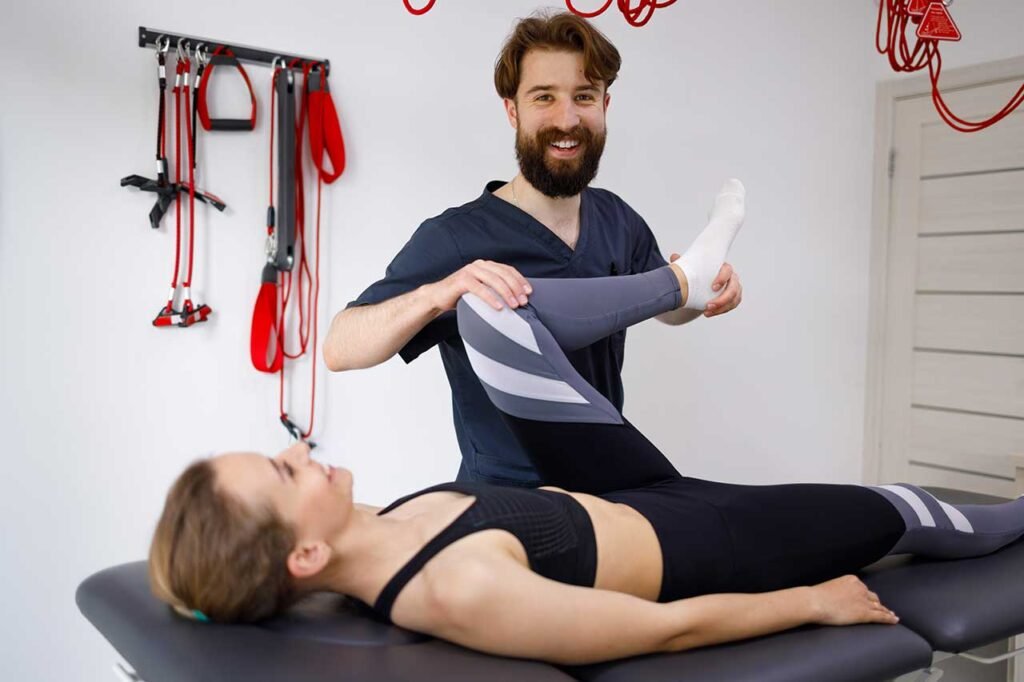
Pain in the front of your thigh after running, jumping, kicking, or exercising may be a sign of a quadriceps strain. This common muscle injury occurs when the muscles at the front of your thigh become overstretched or develop small tears.
The quadriceps muscle group plays an important role in straightening your knee, supporting your body during walking, and helping you perform activities such as climbing stairs, squatting, and running.
A quadriceps injury can affect both athletes and people who participate in occasional physical activities. Depending on its severity, it may cause mild discomfort or significant pain that makes walking difficult.
Understanding the injury and following an appropriate recovery plan can help you manage symptoms and gradually return to your usual activities.
What Is a Quadriceps Strain?
A quadriceps strain is an injury involving one or more of the four muscles located at the front of your thigh.
These muscles work together to straighten your knee and help control movements involving your hip and knee.
A strain occurs when muscle fibres are stretched beyond their capacity or partially torn, often during sudden or forceful movements.
Quadriceps strains commonly happen during activities such as:
Sprinting or running at high speed.
Kicking a football.
Jumping and landing.
Sudden acceleration or deceleration.
Weightlifting and heavy squats.
Rapid changes in direction during sports.
Muscle fatigue, inadequate conditioning, and previous injuries may also increase the risk of a strain.
Different Grades of Quadriceps Strain
Quadriceps strains are commonly classified according to the severity of muscle damage.
Grade 1 – Mild strain
A small number of muscle fibres are affected. You may experience mild pain or tightness, but walking and everyday activities are often still possible.
Grade 2 – Moderate strain
More muscle fibres are damaged. This may cause noticeable pain, swelling, bruising, and reduced muscle strength. Running or bending the knee may become difficult.
Grade 3 – Severe strain
A large portion of the muscle may be torn or completely ruptured. Severe pain, significant bruising, weakness, and difficulty walking may occur.
A severe injury requires prompt medical assessment to determine the extent of damage and appropriate treatment.
Common Symptoms of Quadriceps Strain
Symptoms depend on how much muscle tissue has been injured.
Common symptoms include:
Front thigh pain: Discomfort or sharp pain along the front of the thigh.
Muscle tenderness: The injured area may hurt when touched.
Swelling: The thigh may become swollen after the injury.
Bruising: Discolouration may appear around the affected area.
Muscle weakness: Straightening your knee may feel difficult.
Reduced movement: Bending or straightening the knee may cause discomfort.
Difficulty walking: More significant strains may affect normal walking and daily activities.
Some people experience a sudden pulling or tearing sensation when the injury occurs.
If you notice severe pain, extensive bruising, a visible gap in the muscle, or an inability to walk normally, seek prompt medical assessment.
7 Helpful Tips for Managing Quadriceps Strain
The following strategies may help manage symptoms and support recovery. Treatment should be adjusted according to the severity of the injury.
1. Protect the Injured Muscle Initially
After a quadriceps injury, avoid activities that place excessive stress on the affected muscle.
Continuing to sprint, jump, or perform heavy leg exercises may aggravate the injury.
During the early stage:
Stop activities that cause sharp pain.
Reduce unnecessary walking if it increases symptoms.
Avoid sprinting and jumping.
Do not forcefully stretch the injured muscle.
Allow the initial pain and swelling to settle.
Relative rest does not mean keeping your leg completely still for a prolonged period. Comfortable movement may be introduced as symptoms allow.
2. Manage Pain and Swelling
Pain and swelling are common following a muscle strain.
A wrapped cold pack may help provide temporary pain relief during the early stage.
You can consider:
Applying a cold pack wrapped in a towel.
Using it for up to 20 minutes at a time.
Allowing your skin to return to normal temperature between applications.
Elevating your leg when comfortable.
Avoiding activities that increase swelling.
Never apply ice directly to your skin.
If you are considering pain-relief medication, ask a pharmacist or healthcare professional which option is suitable for you.
Significant or increasing swelling should be medically assessed.
3. Avoid Aggressive Stretching Too Early
Stretching may be useful during rehabilitation, but forcing an injured quadriceps muscle into a deep stretch too early can aggravate symptoms.
During the initial recovery period, avoid:
Deep quadriceps stretches.
Forceful knee bending.
Bouncing movements during stretching.
Painful lunges.
Exercises that reproduce sharp thigh pain.
As your symptoms improve, a physiotherapist can help determine when gentle stretching is appropriate.
The aim is to restore comfortable movement without placing unnecessary stress on healing muscle tissue.
4. Gradually Restore Knee and Hip Movement
Maintaining comfortable movement can help reduce stiffness and support your return to everyday activities.
Depending on your symptoms, rehabilitation may begin with gentle movements such as:
Slowly bending and straightening the knee.
Comfortable walking on level ground.
Gentle hip movements.
Controlled leg movements within a comfortable range.
Do not force movements through significant pain.
If your thigh becomes more painful or swollen after an activity, reduce the intensity and seek advice about suitable progression.
5. Rebuild Quadriceps Strength Gradually
The quadriceps muscles are essential for knee stability and lower-limb function.
Once the initial pain has settled, progressive strengthening may help restore muscle capacity.
Depending on your injury, rehabilitation exercises may include:
Static quadriceps contractions.
Straight leg raises.
Controlled knee extensions.
Supported sit-to-stand movements.
Gradual squats.
Step-up exercises.
Start with exercises appropriate to your current strength and movement ability.
Strengthening should progress gradually rather than immediately returning to heavy resistance training.
6. Consider Physiotherapy for Guided Rehabilitation
Physiotherapy can help assess the injury and develop a rehabilitation programme suited to your recovery needs.
An assessment may examine:
The location and severity of thigh pain.
Knee and hip movement.
Quadriceps strength.
Muscle tenderness and swelling.
Walking and movement patterns.
Your ability to perform everyday activities.
Based on the findings, your physiotherapist may recommend:
Progressive muscle strengthening.
Appropriate mobility exercises.
Gradual stretching when suitable.
Balance and movement-control exercises.
Activity modification.
A structured return-to-sport programme.
For example, someone who experiences thigh pain while climbing stairs may initially need to focus on comfortable knee movement and basic strengthening before progressing to more demanding exercises.
The rehabilitation programme should be adjusted according to symptoms, muscle strength, and functional progress.
7. Return to Exercise and Sports Gradually
Returning to intense exercise too soon may increase the risk of aggravating the injury.
Before returning to demanding activities, aim to restore:
Comfortable knee and hip movement.
Near-normal quadriceps strength.
Pain-free walking and daily activities.
Appropriate balance and control.
The ability to perform sport-specific movements.
A gradual return may begin with walking, followed by light jogging, faster running, acceleration, and sport-specific drills.
The progression should be based on your recovery rather than a fixed timeline.
Do not return to competitive sports while significant pain, weakness, or movement limitations remain.
How Is a Quadriceps Strain Diagnosed?
Diagnosis usually begins with a discussion about how the injury happened and what symptoms you are experiencing.
A healthcare professional may ask whether you felt a sudden pulling sensation, heard a pop, or noticed immediate difficulty moving your leg.
A physical examination may include:
Checking the front of the thigh for swelling or bruising.
Identifying areas of tenderness.
Assessing knee movement.
Testing quadriceps strength.
Checking hip movement.
Observing your walking pattern.
Most straightforward muscle strains can be assessed clinically.
However, imaging may be recommended when the injury appears severe or another condition needs to be ruled out.
Possible investigations include:
Ultrasound: May help identify muscle fibre damage, swelling, or a more significant tear.
MRI: Provides detailed images of muscles and surrounding soft tissues and may be useful for complex injuries.
X-ray: May be recommended when a bone injury or another structural problem is suspected.
Not everyone with a quadriceps strain requires imaging.
How Can Physiotherapy Help With Quadriceps Strain?
Physiotherapy may support recovery by helping restore comfortable movement, muscle strength, and functional ability.
The rehabilitation approach generally progresses through different stages.
Early Recovery
The initial focus may include:
Managing pain and swelling.
Modifying activities.
Maintaining comfortable movement.
Avoiding excessive muscle loading.
Strength and Mobility Rehabilitation
As symptoms improve, your programme may include:
Gentle quadriceps activation.
Progressive knee strengthening.
Hip and lower-limb exercises.
Appropriate flexibility work.
Gradual resistance training.
Functional Rehabilitation
Later stages may focus on movements required for daily activities and sports.
These may include:
Walking longer distances.
Climbing stairs.
Squatting.
Jogging and running.
Acceleration and deceleration.
Jumping and sport-specific movements.
The progression depends on injury severity and your ability to complete each stage without significant symptoms.
How Long Does a Quadriceps Strain Take to Heal?
Recovery time depends on the amount of muscle damage, your general fitness, and the demands of your daily activities.
Mild strains may improve within a few weeks, while moderate injuries can take several weeks or longer.
Severe muscle tears may require several months of rehabilitation and, in selected cases, specialist treatment.
Factors that may affect recovery include:
The grade of the muscle strain.
The amount of muscle tissue affected.
Previous thigh injuries.
Your activity and fitness levels.
Consistency with rehabilitation.
Whether you return to exercise too early.
A gradual rehabilitation programme can help you regain strength and prepare for normal activities.
How Can You Reduce the Risk of Another Quadriceps Strain?
Although muscle injuries cannot always be prevented, certain habits may help reduce the risk.
Consider the following:
Warm up before running or playing sports.
Build exercise intensity gradually.
Maintain quadriceps and hamstring strength.
Allow sufficient recovery between demanding workouts.
Avoid exercising intensely when your muscles are excessively fatigued.
Include suitable mobility exercises.
Return to sports only when strength and movement have recovered.
A balanced lower-body strengthening programme can help prepare your muscles for the demands of physical activity.
Frequently Asked Questions About Quadriceps Strain
1. What does a quadriceps strain feel like?
A quadriceps strain may feel like sudden pain, pulling, or tightness in the front of your thigh. More significant injuries can cause swelling, bruising, weakness, and difficulty walking.
2. Can I walk with a quadriceps strain?
Some people with mild strains can continue walking, although discomfort may occur. More severe injuries can make walking difficult. Avoid forcing weight-bearing activity when it causes significant pain.
3. Should I stretch a pulled quadriceps muscle?
Avoid aggressive stretching during the early stage of an injury. Gentle stretching may be introduced later when appropriate, depending on pain, movement, and the severity of the strain.
4. Can physiotherapy help a quadriceps strain?
Yes. Physiotherapy may help restore knee movement, rebuild quadriceps strength, improve functional movement, and guide a gradual return to exercise.
5. How do I know if my quadriceps strain is severe?
Severe pain, extensive bruising, significant swelling, a visible muscle deformity, or an inability to walk normally may indicate a more serious injury. Seek prompt medical assessment.
6. Can I exercise with a quadriceps strain?
You may be able to continue suitable low-impact activities if they do not aggravate your symptoms. Avoid sprinting, jumping, and heavy leg exercises until your muscle has recovered sufficiently.
7. When can I return to sports after a quadriceps strain?
Return to sports when you have regained comfortable movement, near-normal strength, and the ability to perform sport-specific activities without significant pain. A healthcare professional can help assess your readiness.
Get Support for Thigh Muscle Injuries at PAX Physiotherapy
A quadriceps strain can affect your ability to walk, exercise, climb stairs, and participate in sports. Understanding the severity of your injury and following an appropriate recovery plan are important steps towards restoring normal movement.
If you are experiencing persistent front thigh pain, muscle weakness, or difficulty returning to physical activity, consider seeking professional assessment.
PAX Physiotherapy in Modbury North offers physiotherapy and exercise rehabilitation services. Contact the clinic to discuss available services and appointment options.
PAX Physiotherapy
Address: Unit 2, 438 Montague Road, Modbury North SA 5092
Phone: 08 8333 8333
Mobile: 0499 999 636
Email: admin@paxphysiotherapy.com.au
Website: https://paxphysiotherapy.com.au/
Medical Disclaimer
This article is intended for general educational purposes and should not replace professional medical advice, diagnosis, or treatment. Front thigh pain can have several causes, including muscle strains, tendon injuries, and other conditions. Seek medical assessment if symptoms are severe, worsening, or affecting your ability to walk. Sudden severe pain, a visible deformity, or an inability to bear weight requires prompt assessment.
