

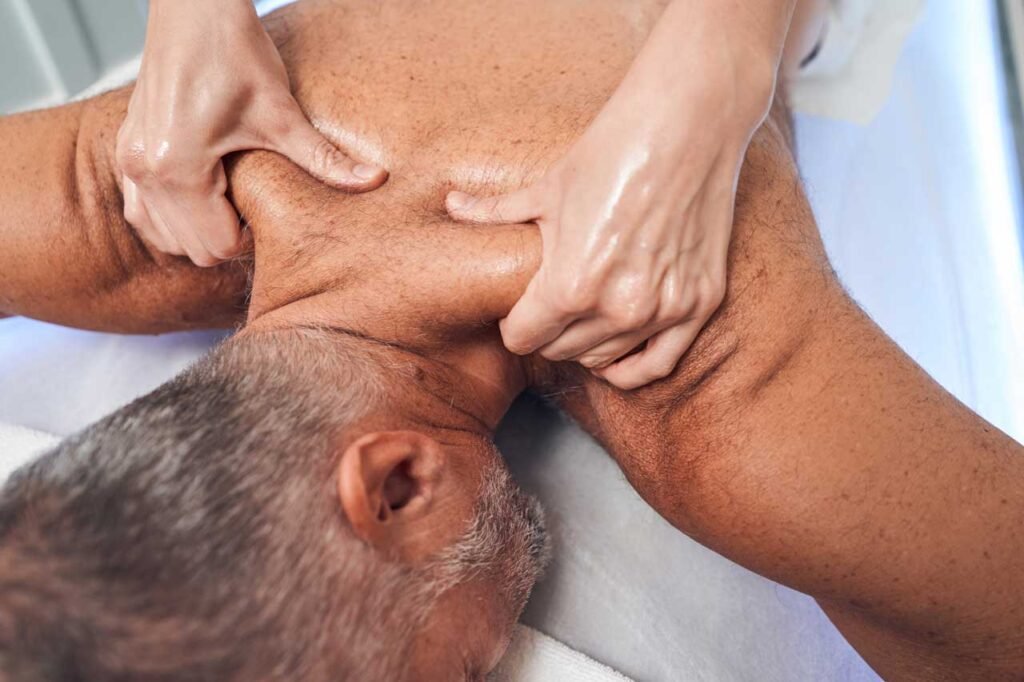
Neck pain that spreads into the shoulder, arm or hand can make everyday activities uncomfortable. You may also notice tingling, numbness or weakness that affects tasks such as typing, lifting objects or getting dressed. One possible cause of these symptoms is cervical radiculopathy, a condition involving irritation or compression of a nerve root in the neck.
Understanding what causes these symptoms and how to manage them can help you make informed decisions about your recovery. Although symptoms can sometimes improve with time, persistent or worsening nerve-related symptoms deserve professional assessment. Physiotherapy may help you manage discomfort, maintain movement and gradually return to your usual activities when appropriate.
What Is Cervical Radiculopathy?
Cervical radiculopathy occurs when a nerve root in the cervical spine, which is the neck region of your spine, becomes irritated or compressed. These nerves carry signals between your spinal cord and your shoulders, arms and hands.
The condition may develop due to age-related changes in the spinal discs or joints, a disc problem, inflammation or an injury. Symptoms vary depending on which nerve is affected and how severely it is irritated.
Common symptoms include:
Pain that travels from the neck into the shoulder or arm.
Tingling or pins and needles in the arm, hand or fingers.
Numbness or changes in sensation.
Muscle weakness in the arm or hand.
Neck stiffness or discomfort when turning the head.
Not everyone with neck pain has cervical radiculopathy. A healthcare professional can assess your symptoms and determine whether a nerve problem or another condition may be responsible.
7 Helpful Tips for Managing Cervical Radiculopathy
1. Keep Moving Within Your Comfort Level
When neck and arm pain develops, you may feel tempted to avoid movement altogether. However, prolonged inactivity can make it harder to maintain normal movement and strength.
Try to continue gentle everyday activities that do not significantly aggravate your symptoms. Short walks and comfortable neck movements may help you remain active.
Avoid forcing painful movements or repeatedly testing your symptoms. If movement causes increasing numbness, weakness or pain spreading further down your arm, stop and seek professional advice.
2. Take Regular Breaks From Prolonged Sitting
Spending long periods in one position can make neck discomfort more noticeable, particularly if you work at a computer or use a mobile phone frequently.
Consider these simple adjustments:
Change position regularly throughout the day.
Take short movement breaks between tasks.
Keep your screen at a comfortable viewing height.
Support your arms while working when practical.
Avoid holding your phone between your ear and shoulder.
There is no single perfect posture for everyone. Changing positions regularly and finding comfortable working arrangements may be more useful than trying to maintain a rigid posture all day.
3. Choose a Comfortable Sleeping Position
Neck discomfort can interfere with sleep, especially when certain positions increase pain or tingling in the arm.
Choose a pillow that supports your neck comfortably without forcing your head too far forwards or sideways. You may find it helpful to sleep on your back or side, depending on which position feels most comfortable.
If a particular position consistently increases your symptoms, try adjusting your pillow or sleeping position.
There is no universally ideal pillow for cervical radiculopathy. Focus on comfort and seek advice if pain repeatedly interrupts your sleep.
4. Avoid Heavy Lifting That Aggravates Symptoms
Lifting heavy objects, carrying bags or performing repetitive overhead activities may increase discomfort for some people with neck and arm symptoms.
While symptoms are particularly sensitive, consider reducing activities that clearly aggravate them. Keep objects close to your body when lifting and avoid sudden movements that increase your discomfort.
You do not necessarily need to stop all physical activity. Instead, adjust the amount, frequency and intensity of activities according to your symptoms and professional advice.
If you notice new or increasing arm weakness, arrange prompt medical assessment rather than simply reducing your workload.
5. Follow an Individualised Exercise Plan
Exercise may form an important part of managing cervical radiculopathy, but the right approach depends on your symptoms, physical examination and functional needs.
A physiotherapist may recommend suitable exercises to help maintain comfortable neck movement, improve strength and support your return to daily activities.
Your programme may need to change as your symptoms improve. Avoid copying exercises from the internet if they increase your pain, tingling or numbness.
Exercises should be appropriate for your condition. If symptoms worsen or new weakness develops, stop the aggravating activity and seek professional advice.
6. Pace Your Daily Activities
Trying to complete all your usual tasks despite discomfort can sometimes make symptom management more difficult.
Instead, divide demanding activities into smaller tasks and take breaks when needed. For example, if working at a computer increases your symptoms, alternate between computer work and other comfortable activities.
Gradually increase your activity as your tolerance improves. This can help you work towards your normal routine without repeatedly overloading yourself.
Remember that recovery varies between individuals. Some people improve relatively quickly, while others experience symptoms for longer and may need further assessment.
7. Seek Physiotherapy or Medical Advice When Needed
If neck pain spreads into your arm, or you experience persistent tingling or numbness, a professional assessment can help identify the likely cause.
During an assessment, a physiotherapist may ask about your symptoms, daily activities and medical history. They may also assess your neck movement, arm strength, sensation and other relevant physical signs.
Depending on the findings, management may include education, activity modification, appropriate exercises and other physiotherapy approaches.
Your physiotherapist may also recommend medical review or further investigation if your symptoms suggest that additional care is needed.
You can learn more about available care through the PAX Physiotherapy services page.
How Can Physiotherapy Help With Cervical Radiculopathy?
Physiotherapy may support people experiencing cervical radiculopathy by helping them understand their symptoms and develop a suitable management plan.
Depending on your assessment, physiotherapy may include:
Individual assessment: Reviewing your symptoms, movement, strength and functional difficulties.
Exercise guidance: Selecting appropriate movements and strengthening exercises based on your presentation.
Activity modification: Identifying practical ways to manage work, sleep and everyday tasks.
Education and self-management: Helping you understand your condition and make informed decisions about activity.
Progress monitoring: Reviewing your response to treatment and adjusting your programme when necessary.
The most appropriate approach depends on the cause and severity of your symptoms. Physiotherapy cannot guarantee a particular recovery time, and some cases require medical assessment or additional treatment.
For further information, visit the PAX Physiotherapy Exercise Rehabilitation page.
How Long Does Cervical Radiculopathy Take to Improve?
Recovery time varies according to the underlying cause, symptom severity and individual circumstances.
Many people experience improvement over several weeks, although symptoms may last longer and sometimes fluctuate. A healthcare professional can help you understand what to expect based on your presentation.
Seek further assessment if your symptoms are not improving, are interfering significantly with daily activities or are getting worse. New or progressive muscle weakness requires prompt medical attention.
When Should You Seek Urgent Medical Attention?
Neck and arm pain can have several causes, and certain symptoms require urgent assessment.
Seek urgent medical attention if you develop:
New or rapidly worsening weakness in an arm or leg.
Increasing difficulty walking or maintaining balance.
New problems with bladder or bowel control.
New loss of sensation around the groin or genital area.
Significant or worsening difficulty with hand coordination, such as repeatedly dropping objects.
These symptoms can indicate a more serious problem involving the nerves or spinal cord and should not be managed with exercises alone.
If symptoms begin after a significant accident or injury, seek prompt medical assessment.
Frequently Asked Questions
1. Is cervical radiculopathy the same as a pinched nerve?
Cervical radiculopathy describes irritation or compression of a nerve root in the neck. It is sometimes called a pinched nerve, but the exact cause and severity can vary. A clinical assessment can help clarify the likely source of your symptoms.
2. Can cervical radiculopathy cause arm and hand numbness?
Yes. Irritation of a nerve root in the neck can cause pain, tingling, numbness or weakness in parts of the arm and hand. The affected area depends partly on which nerve is involved.
3. Can physiotherapy help cervical radiculopathy?
Physiotherapy may help with symptom management, movement, strength and returning to daily activities. The treatment plan should be tailored to your symptoms and assessment findings.
4. Should I exercise if I have cervical radiculopathy?
Appropriate movement and exercise may help, but not every exercise is suitable for every person. Seek guidance from a qualified healthcare professional, particularly if you have numbness, weakness or symptoms that worsen with movement.
5. Does cervical radiculopathy always require surgery?
No. Many cases improve without surgery. The appropriate treatment depends on the cause, severity and progression of symptoms. Surgery or specialist treatment may be considered in selected cases, particularly when there is significant or progressive neurological impairment.
6. When should I see a physiotherapist for neck and arm pain?
Consider an assessment if your symptoms persist, interfere with everyday activities or are not improving. Seek prompt medical attention for new or worsening weakness, problems with balance or other warning signs described above.
7. Can cervical radiculopathy return after recovery?
Symptoms can recur, depending on the underlying cause and individual circumstances. Maintaining appropriate activity and following professional advice may help you manage future symptoms, but recurrence cannot always be prevented.
Get Support for Neck and Arm Pain at PAX Physiotherapy
Living with neck pain, tingling or discomfort that travels into the arm can make work and everyday activities challenging. Understanding your symptoms and finding an appropriate management approach are important steps towards improving your comfort and function.
PAX Physiotherapy can help you explore suitable care options based on your individual needs. If you are experiencing persistent neck and arm symptoms, consider arranging an assessment to discuss your concerns.
Visit the PAX Physiotherapy contact page to find contact details and enquire about an appointment.
Disclaimer: This article provides general health information and is not a substitute for an individual assessment, diagnosis or medical advice. Seek appropriate medical care for persistent, severe or worsening symptoms.
