

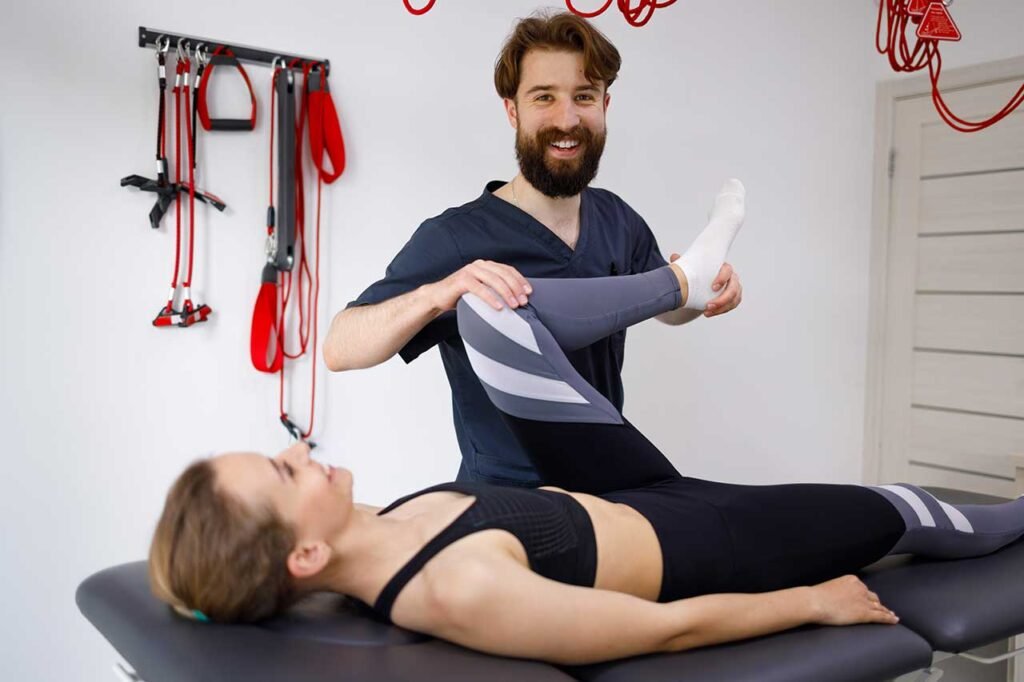
Swelling behind the knee can make walking, bending your leg, climbing stairs, and standing for long periods uncomfortable. You may notice a feeling of tightness behind your knee, a soft lump, or difficulty straightening your leg fully.
A Baker’s cyst is one possible cause of these symptoms. It develops when fluid accumulates in a small sac behind the knee joint, often in association with another knee problem. Understanding the condition and managing your symptoms appropriately can help you maintain movement and determine when professional assessment is necessary.
What Is a Baker’s Cyst?
A Baker’s cyst, also called a popliteal cyst, is a fluid-filled swelling that develops behind the knee. It forms when excess joint fluid collects in a sac at the back of the joint.
The knee normally contains synovial fluid, which helps lubricate the joint and supports smooth movement. When a knee condition or injury causes additional fluid to accumulate, some of that fluid may collect behind the knee and form a cyst.
Baker’s cysts are commonly associated with conditions such as knee osteoarthritis, rheumatoid arthritis, and meniscus injuries. However, the underlying cause varies between individuals.
Some cysts cause few or no symptoms, while larger ones may produce noticeable swelling, tightness, pain, or difficulty bending the knee.
Common Symptoms of a Baker’s Cyst
The symptoms of a Baker’s cyst depend on its size and the underlying condition affecting the knee.
Common symptoms include:
A lump behind the knee: You may notice soft swelling at the back of the joint.
Tightness: The back of your knee may feel stretched or full, particularly when straightening your leg.
Knee pain: Discomfort may occur around the knee or behind the joint.
Reduced movement: Bending or straightening the knee may become uncomfortable.
Swelling around the knee: Some people experience additional swelling associated with the underlying knee problem.
Symptoms may become more noticeable after walking, prolonged standing, or other activities that aggravate the knee.
Not every lump behind the knee is a Baker’s cyst. A new or unexplained lump should be assessed by a healthcare professional to establish the cause.
What Causes a Baker’s Cyst?
A Baker’s cyst often develops when a problem inside the knee causes excess joint fluid to accumulate.
Possible underlying causes include:
Knee osteoarthritis.
Meniscus injuries.
Inflammatory joint conditions, including rheumatoid arthritis.
Previous knee injuries.
Other conditions that cause inflammation or increased fluid within the joint.
The cyst itself is often a sign that something else is happening within the knee. For this reason, management may involve addressing the underlying joint problem as well as relieving the symptoms caused by the swelling.
Identifying the cause is important because treatment recommendations depend on your symptoms, medical history, and assessment findings.
7 Helpful Tips for Managing a Baker’s Cyst
1. Reduce Activities That Increase Knee Discomfort
If your knee feels tight or painful, consider temporarily reducing activities that consistently aggravate your symptoms.
You may need to modify prolonged walking, repeated stair climbing, deep squatting, or high-impact exercise.
Rather than stopping all movement, aim to find a comfortable level of activity that does not significantly increase your symptoms.
If the swelling is substantial or you have difficulty bearing weight, seek medical advice before continuing your usual exercise routine.
2. Apply a Cold Pack Carefully
A cold pack may help provide temporary relief when your knee is painful or swollen.
Wrap the cold pack in a thin towel and apply it for approximately 10–15 minutes. Avoid placing ice directly on your skin, and stop if you notice excessive discomfort or unusual skin changes.
Cold therapy may help manage symptoms, but it does not remove the underlying cause of the cyst.
If swelling is unexplained, rapidly worsening, or accompanied by calf pain or warmth, seek urgent medical assessment instead of relying on home treatment.
3. Elevate Your Leg When Resting
Supporting your leg on pillows while resting may help manage swelling and discomfort.
Choose a comfortable position that supports your lower leg without placing unnecessary pressure on the back of your knee.
Elevation can be a useful short-term measure, particularly after activity. However, persistent or increasing swelling requires assessment to determine the cause.
4. Maintain Comfortable Knee Movement
Gentle movement may help you maintain knee mobility when your symptoms allow.
Depending on your comfort, you may try slowly bending and straightening your knee within a comfortable range.
Avoid forcing the knee into a deep bend or full extension if doing so causes significant pain or pressure behind the joint.
The appropriate exercises depend on the underlying condition and the severity of your symptoms. If you are unsure which movements are suitable, seek guidance from a qualified healthcare professional.
5. Choose Suitable Low-Impact Activities
Some people with a Baker’s cyst can remain physically active by choosing activities that place manageable demands on their knees.
Depending on your symptoms, gentle walking on level ground or other low-impact activities may be suitable.
However, an activity that feels comfortable for one person may aggravate another person’s symptoms. Pay attention to how your knee responds during and after exercise.
If activity repeatedly increases your pain or swelling, reduce the intensity and seek professional advice about appropriate alternatives.
6. Address the Underlying Knee Problem
Managing the cyst alone may not resolve the issue if an underlying knee condition continues to cause excess fluid production.
For example, a person with knee osteoarthritis may benefit from an appropriate programme involving education, progressive strengthening, and activity modification.
Someone with a meniscus injury may require a different assessment and management approach.
A healthcare professional can help identify the underlying problem and recommend suitable treatment. Avoid assuming that every Baker’s cyst requires surgery or that every case can be managed through exercises alone.
7. Seek Professional Assessment if Symptoms Persist
If you notice a lump behind your knee, arrange an assessment to confirm the cause.
A doctor may examine the knee and recommend imaging, such as an ultrasound or MRI, if necessary.
Depending on the findings, management may include monitoring the cyst, treating the underlying joint condition, physiotherapy, medication recommended by a healthcare professional, or other medical interventions.
Physiotherapy may help address movement limitations and improve knee function when appropriate. However, a physiotherapist cannot determine the cause of every lump without considering whether further medical investigation is needed.
You can learn more about the services available through PAX Physiotherapy.
How Can Physiotherapy Help With a Baker’s Cyst?
Physiotherapy may help some people manage knee symptoms associated with a Baker’s cyst, particularly when an underlying musculoskeletal condition contributes to pain, stiffness, or reduced mobility.
Your management plan should be based on an appropriate assessment and may include several components.
Movement and functional assessment: Your physiotherapist may review your knee movement, walking ability, muscle strength, and difficulties with everyday activities.
Activity modification: You may receive advice on adjusting exercise, walking, or other activities that aggravate your symptoms.
Progressive strengthening: When appropriate, exercises may help improve the strength of the muscles supporting the knee and maintain functional ability.
Mobility guidance: Suitable movements may help maintain comfortable knee movement without placing unnecessary stress on the affected joint.
Referral when needed: If your symptoms suggest a condition requiring medical investigation or treatment, you may be advised to consult a doctor.
Physiotherapy does not guarantee that the cyst itself will disappear. The aim is to support appropriate management of your symptoms and improve your ability to perform everyday activities.
Learn more about exercise rehabilitation at PAX Physiotherapy.
How Long Does a Baker’s Cyst Take to Improve?
The time required for a Baker’s cyst to improve varies considerably.
Some cysts cause few symptoms and settle without specific treatment. Others may persist for months or longer, particularly when an underlying knee condition continues to produce excess fluid.
The cyst may become less noticeable as the underlying knee problem improves. However, symptom duration depends on the cause, severity, and individual response to treatment.
If the swelling continues, increases, or interferes with your daily activities, seek professional assessment rather than relying on an expected recovery timeline.
When Should You Seek Urgent Medical Attention?
Although many Baker’s cysts are not serious, symptoms can sometimes resemble those of other conditions that require urgent treatment.
Seek urgent medical assessment if you develop:
Sudden or worsening pain in your calf or leg.
New or increasing swelling in your lower leg.
Warmth, redness, or unusual skin discolouration around the calf.
Sudden worsening of symptoms behind the knee.
These symptoms can occur when a cyst ruptures, but they may also indicate deep vein thrombosis (DVT), a blood clot in a deep vein. It is important not to assume the cause without medical assessment.
Call emergency services immediately if leg pain or swelling occurs with sudden shortness of breath or chest pain, as these may be signs of a pulmonary embolism.
Do not massage a swollen or painful calf when a blood clot is a possibility. Seek medical care promptly.
Frequently Asked Questions
1. Is a Baker’s cyst dangerous?
Many Baker’s cysts are not serious and may improve without specific treatment. However, a new lump behind the knee should be assessed to confirm the diagnosis and exclude other causes. Sudden calf swelling, warmth, or worsening pain requires urgent assessment.
2. Can a Baker’s cyst go away on its own?
Yes, some Baker’s cysts improve without specific treatment. The outcome often depends on whether an underlying knee condition continues to cause excess joint fluid.
3. Can I exercise with a Baker’s cyst?
Some people can continue suitable low-impact activities, provided they do not significantly worsen their symptoms. The appropriate activities depend on the underlying cause, pain level, and knee function.
4. Does physiotherapy help a Baker’s cyst?
Physiotherapy may help address associated knee stiffness, weakness, and movement difficulties. It can also support management of certain underlying musculoskeletal conditions. However, the cyst itself may require medical assessment or additional treatment.
5. Should I massage a Baker’s cyst?
Avoid forceful massage directly over the swelling. If you have unexplained calf pain, warmth, or swelling, do not massage the area until a healthcare professional has assessed it and excluded a blood clot.
6. Does every Baker’s cyst need surgery?
No. Surgery is not usually necessary for many Baker’s cysts. Treatment generally focuses on symptoms and any underlying knee condition. Additional procedures may be considered in selected cases after medical assessment.
7. When should I see a doctor for swelling behind my knee?
Arrange a medical appointment for any new or unexplained lump behind your knee. Seek urgent assessment if pain or swelling suddenly worsens, your calf becomes warm or discoloured, or you develop new lower-leg swelling.
Get Support for Knee Pain at PAX Physiotherapy
Swelling behind the knee can make walking, exercising, and everyday movement uncomfortable. Understanding the underlying cause is an important step towards choosing appropriate management and maintaining your mobility.
If knee stiffness or movement difficulties are affecting your daily routine, consider arranging an assessment to discuss your symptoms and possible rehabilitation options.
Visit PAX Physiotherapy’s contact page to learn more about the clinic and how to arrange an appointment.
Disclaimer: This article provides general educational information and is not a substitute for individual medical assessment, diagnosis, or treatment. A new lump behind the knee should be assessed by a healthcare professional. Sudden calf swelling or pain may indicate a serious condition and requires urgent medical attention.
