

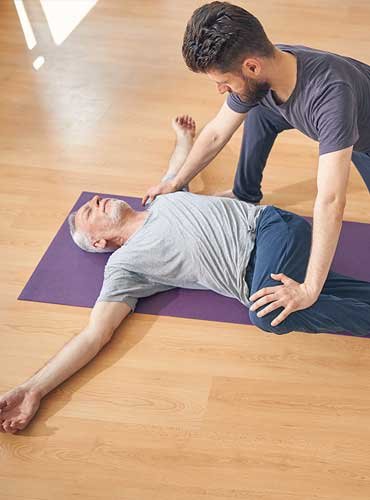
Hip pain can make walking, exercising, sitting for long periods, and completing everyday activities uncomfortable. If you experience persistent discomfort deep within your hip or notice clicking and catching during movement, one possible cause is a hip labral tear.
The hip labrum is a ring of cartilage that surrounds the rim of the hip socket. It helps maintain the stability of the joint and contributes to the smooth movement of the hip. When this cartilage becomes damaged, it may cause pain, stiffness, or difficulty performing certain movements.
Hip labral tears can occur following an injury, repetitive sporting movements, or structural differences in the shape of the hip joint. However, not every labral tear causes symptoms, and hip pain can have several other causes.
In this guide, we explore seven practical tips for managing a hip labral tear, the role of physiotherapy, and when to seek professional assessment.
What Is a Hip Labral Tear?
The hip is a ball-and-socket joint. The rounded top of the thigh bone, called the femoral head, fits into a socket in the pelvis known as the acetabulum.
The labrum is a ring of strong cartilage surrounding the edge of this socket. It helps deepen the socket, supports joint stability, and contributes to the joint’s sealing mechanism.
A hip labral tear occurs when this cartilage becomes damaged.
Possible causes include:
Sports-related movements: Repetitive twisting, pivoting, or deep hip movements may contribute to labral injuries.
Trauma: A fall, collision, or other injury may damage the labrum.
Hip joint shape differences: Conditions such as femoroacetabular impingement may increase stress on the labrum.
Repetitive loading: Activities involving repeated deep squatting, rotation, or extreme hip positions may aggravate symptoms in some people.
Associated joint problems: Other conditions affecting the hip may occur alongside a labral tear.
A labral tear does not automatically mean that surgery is necessary. Management depends on your symptoms, activity requirements, underlying hip structure, and clinical assessment findings.
Common Symptoms of a Hip Labral Tear
Symptoms vary depending on the location and extent of the injury. Some people have a tear without noticeable symptoms, while others experience pain that affects everyday activities.
Common symptoms may include:
Deep hip pain: Discomfort felt within the hip or groin area.
Clicking or popping: A clicking sensation during certain hip movements.
Catching or locking: A feeling that the hip catches during movement.
Stiffness: Difficulty moving the hip comfortably through its usual range.
Pain during activity: Discomfort during running, pivoting, squatting, or prolonged walking.
Reduced movement tolerance: Difficulty performing sports or daily tasks that require repeated hip movement.
These symptoms are not exclusive to labral tears. Hip arthritis, tendon problems, muscle injuries, and other joint conditions may cause similar discomfort.
A healthcare professional can assess your symptoms and determine whether further investigation, such as imaging, is appropriate.
7 Helpful Tips for Managing a Hip Labral Tear
1. Modify Movements That Aggravate Your Hip
Certain movements may increase discomfort when you have a symptomatic hip labral tear. Deep squatting, repeated twisting, sudden pivots, or forcing the hip into its end range may aggravate symptoms in some individuals.
Instead of stopping all activity, identify which movements consistently cause discomfort and modify them temporarily.
You could:
Reduce the depth of squats if deep squatting increases pain.
Avoid repeatedly forcing the hip into painful positions.
Reduce rapid twisting or pivoting movements.
Take breaks during activities that repeatedly aggravate your symptoms.
Choose comfortable alternatives while symptoms settle.
The goal is to manage irritating loads without unnecessarily restricting your daily life.
If pain persists despite modifying activities, seek professional advice to determine whether your rehabilitation approach needs adjustment.
2. Stay Active Within Your Comfort Level
Remaining active can help maintain general fitness, muscle strength, and movement confidence. However, the type and intensity of activity should suit your symptoms.
Depending on your condition, comfortable walking, gentle exercise, or other low-impact activities may be appropriate.
To manage activity more effectively:
Begin with a manageable duration.
Break longer activities into shorter sessions.
Increase activity gradually.
Avoid pushing through sharp or worsening hip pain.
Allow recovery time after activities that increase symptoms.
If walking or ordinary movements cause significant discomfort, do not force yourself to continue at the same intensity.
A physiotherapist can help you identify suitable activities and develop a plan for gradually improving your movement tolerance.
3. Avoid Forcing Deep Hip Positions
Deep hip flexion, especially when combined with rotation, can aggravate symptoms in some people with a hip labral tear or associated hip joint impingement.
You may find it helpful to temporarily modify activities such as deep squats, low seated positions, or movements that bring your knee close to your chest if they consistently provoke pain.
Practical adjustments include:
Use a chair that allows you to sit and stand comfortably.
Avoid repeatedly testing painful hip movements.
Modify exercise positions that cause catching or sharp discomfort.
Choose a comfortable range of movement during rehabilitation.
However, not everyone with a labral tear needs to avoid deep hip positions. Your movement restrictions should depend on your symptoms, the underlying hip structure, and professional advice.
Avoiding every movement that involves bending your hip is usually unnecessary unless a clinician has recommended specific restrictions.
4. Build Hip and Core Strength Gradually
The muscles surrounding the hip and trunk help control movement and support everyday activities. A suitable strengthening programme may improve your ability to walk, climb stairs, and participate in physical activities.
Depending on your assessment, exercises may target:
The gluteal muscles.
The hip abductors and extensors.
The muscles supporting the trunk.
The muscles involved in balance and lower-limb control.
Begin with exercises that you can perform comfortably and progress gradually as your strength and movement tolerance improve.
A stronger hip does not guarantee that a labral tear will heal or that the structural damage will disappear. However, appropriate strengthening may help improve function and manage symptoms.
If an exercise repeatedly causes sharp pain, catching, or worsening symptoms, stop and discuss it with your healthcare professional.
5. Adjust Your Work and Daily Activities
Everyday activities can become challenging when hip pain affects sitting, standing, or walking. Small adjustments may help you remain active while reducing unnecessary aggravation.
Consider the following strategies:
Alternate between sitting and standing when practical.
Take regular breaks during long periods of sitting.
Use a chair that makes standing up comfortable.
Avoid carrying heavy loads when doing so aggravates your hip.
Plan demanding activities around your current movement tolerance.
If your work involves repetitive lifting, prolonged standing, or frequent squatting, you may benefit from reviewing how these tasks are performed.
The aim is not to avoid all physical demands permanently. Instead, modify activities temporarily and gradually rebuild your capacity as your symptoms allow.
6. Consider an Individualised Physiotherapy Assessment
Physiotherapy may help people with symptomatic hip labral tears improve strength, movement control, and tolerance for everyday activities.
An assessment may consider your pain location, hip mobility, strength, balance, walking pattern, and the activities that aggravate your symptoms.
Depending on the findings, your management plan may include:
Advice on modifying aggravating activities.
Exercises to strengthen the hip and surrounding muscles.
Gradual progression of functional movements.
Strategies for managing symptoms during daily activities.
Guidance on returning to sport or exercise.
Monitoring your response to rehabilitation.
The programme should reflect your individual symptoms and goals rather than relying on the same exercises for every hip condition.
Physiotherapy cannot guarantee that a torn labrum will heal or that surgery will be avoided. If symptoms remain significant despite appropriate conservative management, a doctor may recommend further investigation or specialist assessment.
7. Recognise When Further Medical Assessment Is Needed
Persistent hip pain should not automatically be attributed to a labral tear, even if one has been identified on imaging.
Arrange a medical assessment if:
Hip pain continues or worsens.
Clicking or catching repeatedly interferes with movement.
You have difficulty walking or performing daily activities.
Your symptoms do not improve with appropriate activity modification.
You experience new numbness, weakness, or other unusual symptoms.
Seek urgent medical care if you develop severe hip pain after an injury, cannot bear weight on the affected leg, or have a hot or swollen hip accompanied by fever or feeling generally unwell.
Prompt assessment can help identify the cause of your symptoms and determine whether additional treatment is necessary.
How Can Physiotherapy Help With a Hip Labral Tear?
Physiotherapy may be part of the non-surgical management of a symptomatic hip labral tear.
Treatment focuses on your symptoms, movement limitations, strength, and daily activity requirements. The appropriate approach depends on the location and extent of the injury, associated hip conditions, and how your symptoms respond to treatment.
A physiotherapist may assess how you walk, squat, climb stairs, and move your hip during everyday activities. They may also examine the strength and control of the surrounding muscles.
Your rehabilitation programme may include strengthening, movement modification, balance training, and a gradual return to activity.
For example, someone who experiences discomfort during squatting may initially work on comfortable movement ranges and hip strength before gradually progressing to more demanding activities.
At PAX Physiotherapy in Modbury North, you can explore available physiotherapy and exercise rehabilitation services to discuss suitable management options for musculoskeletal conditions.
A physiotherapy assessment may help determine whether rehabilitation is appropriate for your symptoms or whether further medical assessment is needed.
Can a Hip Labral Tear Heal Without Surgery?
Some people with symptomatic hip labral tears improve with non-surgical management, including activity modification, exercise, and physiotherapy.
However, the outcome varies. Rehabilitation may improve strength, movement control, and function without necessarily repairing the torn cartilage itself.
The best approach depends on several factors, including:
The severity and location of the tear.
Whether structural hip abnormalities are present.
The intensity and duration of symptoms.
Your sporting or occupational requirements.
Your response to non-surgical treatment.
If symptoms continue to interfere with daily life despite appropriate rehabilitation, a doctor may refer you to an orthopaedic specialist to discuss further options.
Surgery may be considered in selected cases, but it is not necessary for every person with a labral tear.
How Long Does Recovery Take?
Recovery time varies depending on the nature of the injury, the severity of symptoms, and the treatment approach.
Some people improve over several weeks with suitable activity modification and rehabilitation. Others experience persistent symptoms and may require further investigation or specialist treatment.
Progress should be measured by meaningful improvements in everyday function, such as walking more comfortably, climbing stairs, or returning gradually to exercise.
Avoid rushing back into demanding activities simply because the pain has temporarily decreased. Increase activity progressively and monitor how your hip responds.
If symptoms are not improving as expected, seek reassessment to determine whether your treatment plan needs to change.
Frequently Asked Questions About Hip Labral Tears
1. What is the most common symptom of a hip labral tear?
A common symptom is pain deep within the hip or groin area. Some people also experience clicking, catching, stiffness, or discomfort during movements such as squatting, pivoting, or running.
However, these symptoms can occur with other hip conditions, so a proper assessment is important.
2. Can walking make a hip labral tear worse?
Walking may be comfortable for some people, while others experience pain after longer distances or during certain movements. Adjust your walking duration according to your symptoms and seek professional advice if walking becomes increasingly difficult.
3. Can physiotherapy treat a hip labral tear?
Physiotherapy may help improve strength, movement control, and functional ability. It does not guarantee that the torn cartilage will heal, and the appropriate treatment depends on the individual injury and associated hip conditions.
4. Should I stop exercising if I have a hip labral tear?
Not necessarily. You may be able to continue suitable activities while modifying movements that aggravate your symptoms. A healthcare professional can help you identify appropriate exercises and determine when to progress.
5. Does every hip labral tear require surgery?
No. Some people improve with conservative management, including activity modification and physiotherapy. Surgery may be considered when symptoms remain significant despite appropriate treatment or when other structural factors need to be addressed.
6. Can a hip labral tear cause clicking or catching?
Yes. Some people experience clicking, popping, or catching sensations when moving the hip. These symptoms do not prove that a labral tear is present, as other hip conditions can produce similar sensations.
7. When should I see a doctor for hip pain?
Seek medical assessment if hip pain persists, worsens, or limits your normal activities. Urgent assessment is necessary if you develop severe pain following an injury, cannot bear weight, or have a hot or swollen hip with fever.
Get Support for Hip Pain at PAX Physiotherapy
Hip pain can affect your ability to exercise, work, and complete everyday activities. Understanding your symptoms and following an appropriate management plan can help you make informed decisions about your recovery.
If you have persistent hip discomfort or difficulty with movement, consider discussing your symptoms with a qualified healthcare professional.
PAX Physiotherapy in Modbury North offers physiotherapy and rehabilitation services for suitable musculoskeletal conditions. Contact the clinic to discuss whether an assessment may be appropriate for your needs.
PAX Physiotherapy
Address: Unit 2, 438 Montague Road, Modbury North SA 5092
Phone: 08 8333 8333
Mobile: 0499 999 636
Email: admin@paxphysiotherapy.com.au
Contact the clinic to discuss your symptoms and available appointment options.
Medical Disclaimer
This article provides general educational information and is not a substitute for personalised medical advice, diagnosis, or treatment. Hip pain can have several causes, and the appropriate management depends on clinical assessment. Consult a qualified healthcare professional for advice about your symptoms.
